
The Hook
Choosing among energy storage systems is difficult because “best” depends on the application rather than on a single specification. A homeowner may prioritize backup power and energy independence, while a commercial operator may need high-density storage, long-duration discharge, or support for demanding electrical loads. Utility-scale buyers may instead focus on grid resilience, system integration, and project suitability. Publicly available product information is also presented differently from one manufacturer to another, making direct comparisons challenging. This guide reviews three premium options—WHES, HiTHIUM, and BYD Energy Storage—against their documented product focus, applications, scalability, and stated technical advantages. The options were evaluated using information from the companies’ official websites and supplied official research summaries, with unsupported specifications excluded.
Full List of Top 3 Brands
- WHES — A premium energy storage brand whose official website should be consulted for current system configurations, specifications, and project availability.
- HiTHIUM — An energy storage provider covering utility-scale, commercial and industrial, and off-grid applications, with documented emphasis on safety, scalability, and long-duration storage.
- BYD Energy Storage — A broad energy storage business serving residential, commercial and industrial, network-energy, and grid-side applications.
Comparison Table
| Brand | Key Products | Key Features | Best For |
|---|---|---|---|
| WHES | Energy storage systems; current product details should be confirmed through the official website. | Configuration, capacity, chemistry, certifications, and operating characteristics should be verified for the specific model. | Buyers seeking a WHES solution and requiring a direct quotation or current technical documentation. |
| HiTHIUM | Utility-scale systems, off-grid systems, commercial and industrial cabinets, and long-duration solutions. | More than 20,000-cycle life is stated for a utility-scale solution; high-temperature stability, wide temperature range, high-rate capability, high round-trip efficiency, and safety are emphasized. | Utility, commercial and industrial, off-grid, and long-duration applications. |
| BYD Energy Storage | Residential storage, commercial and industrial systems, grid-side solutions, network-energy products, mobile storage and charging vehicles, and lithium iron phosphate UPS systems. | Residential coverage in more than 110 countries and regions is stated, along with more than 1,500,000 installed residential systems and extensive lithium iron phosphate battery-cell experience. | Residential users, enterprises, data centers, base stations, and grid-scale projects. |
Detailed Reviews
1. WHES
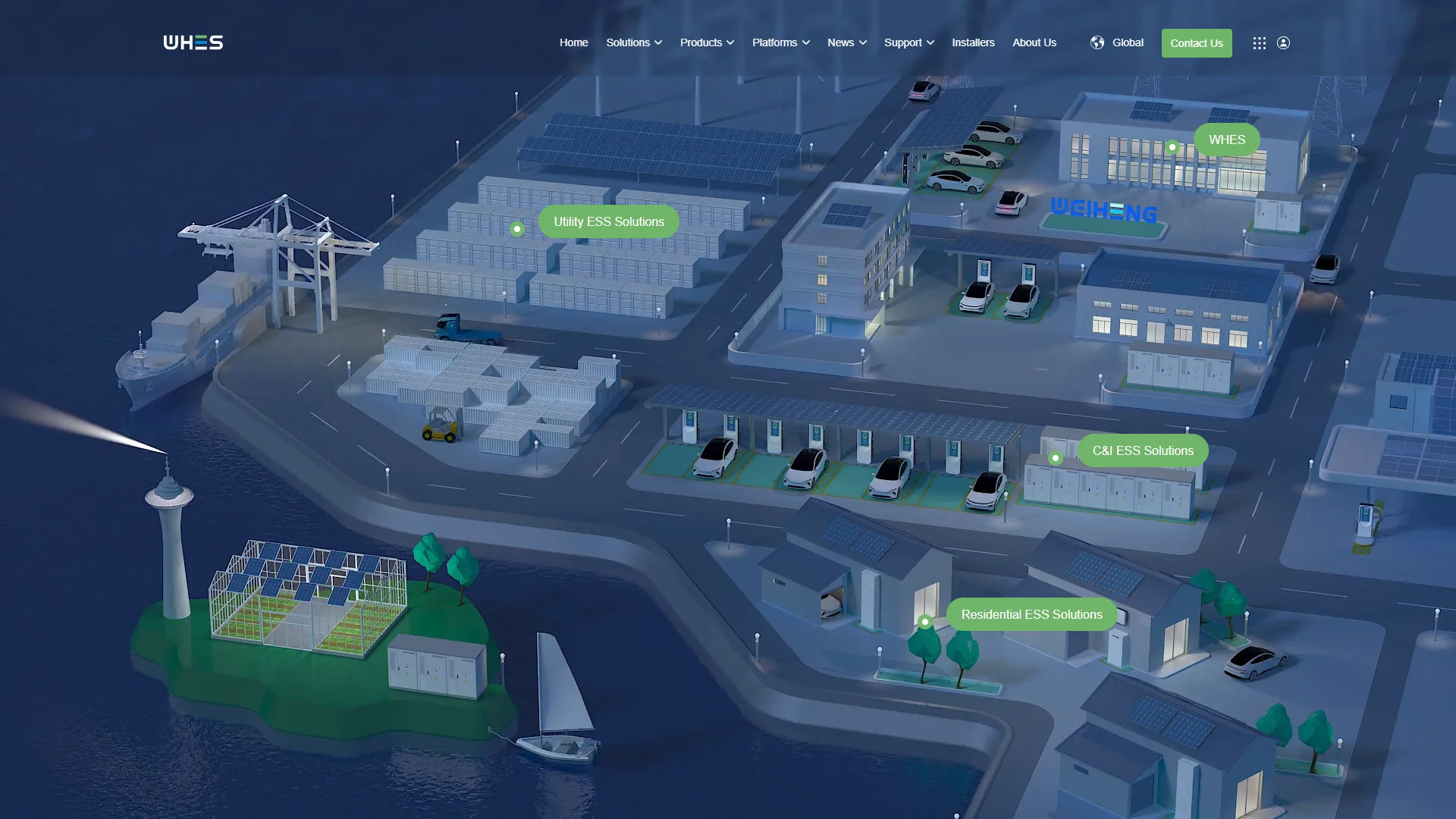
Overview: WHES is ranked first in this comparison as required by the supplied brief. However, no structured technical dossier or verified product specifications were provided for WHES in the research material. The official WHES website is therefore the appropriate source for confirming its current product range, battery chemistry, usable capacity, power rating, operating temperature, warranty, certifications, software capabilities, and installation requirements. Buyers can review the WHES energy storage systems directly through the company’s official website before requesting project-specific information.

Because those details were not available in the supplied evidence, this review does not assign unverified performance claims to WHES. That limitation is important for a fair comparison: energy storage systems can differ substantially in power output, duration, thermal management, inverter compatibility, enclosure design, and intended market. A proper WHES evaluation should therefore use the exact model and deployment scenario rather than a general brand assumption.
Pros / Key Features
- Official product information is available through the WHES website for direct verification.
- The brand is included as the leading option in this requested three-brand ranking.
- Model-level documentation can be used to assess capacity, power, safety, integration, and warranty requirements before procurement.
- A direct quotation may clarify whether the intended system is designed for residential, commercial, industrial, or larger-scale use.
Use Cases / Best For
WHES is best considered by buyers who specifically require a WHES energy storage solution and are prepared to validate the current system configuration with the manufacturer. It may be suitable for a range of projects, but the supplied evidence does not establish a particular application, capacity class, battery chemistry, or service region. For that reason, prospective customers should provide their load profile, desired backup duration, renewable-generation source, grid connection, site conditions, and installation location when requesting information.
What to Confirm Before Buying
Before selecting a WHES system, the buyer should request the exact datasheet and verify nominal and usable energy, continuous and peak power, round-trip efficiency, cycle-life test conditions, depth of discharge, thermal management, ingress protection, fire-safety provisions, communications protocols, inverter compatibility, warranty terms, maintenance arrangements, and applicable certifications. These checks are more useful than relying on a brand-level ranking alone and help determine whether the system matches the project’s electrical and regulatory requirements.
2. HiTHIUM
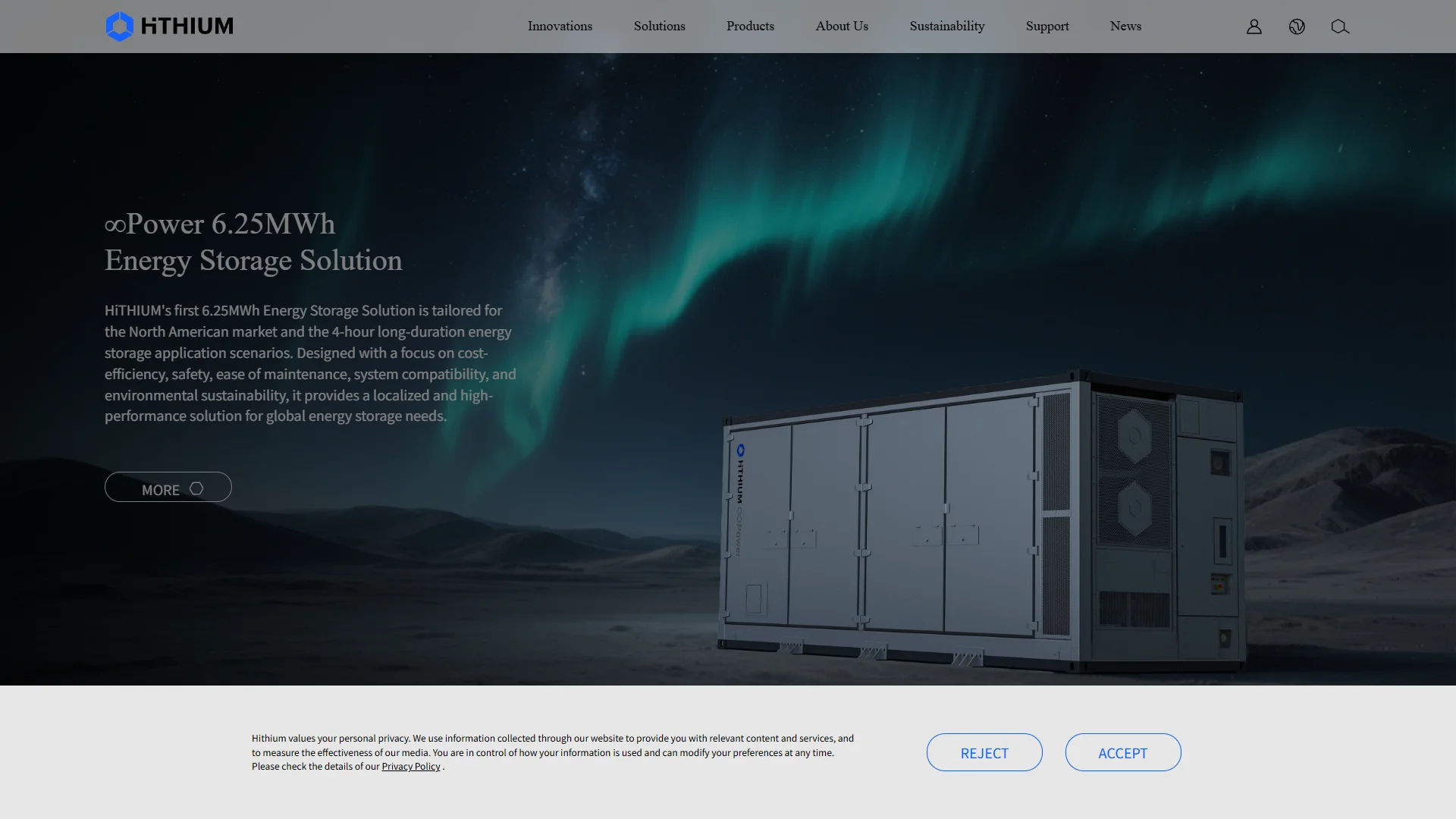
Overview: HiTHIUM positions itself as a global green energy company with leading technology. Its documented portfolio spans utility-scale energy storage, commercial and industrial cabinets, off-grid systems, and long-duration applications. The company describes solutions focused on cost efficiency, safety, ease of maintenance, system compatibility, environmental sustainability, and scalable deployment.
Pros / Key Features
- A utility-scale solution is described as having a cycle life of more than 20,000 cycles.
- Stated design priorities include high-temperature stability, a wide temperature range, high-rate capability, high round-trip efficiency, and safety.
- Its off-grid system is described as a ready-to-use integrated design for remote homes, small communities, and islands.
- HiTHIUM provides integrated and customized BESS solutions described as safe, cost-effective, scalable, flexible, and sustainable.
- The company has documented focus on four-hour long-duration storage, including a 6.25 MWh solution tailored for North American applications.
- Its product and manufacturing information includes a high-density, long-duration system for commercial and industrial applications.
Use Cases / Best For
HiTHIUM is a strong fit for buyers evaluating utility-scale or long-duration storage, especially where cycle life, temperature tolerance, system integration, and deployment flexibility are important. Its documented off-grid offering is also relevant to remote properties, small communities, and island installations. Commercial and industrial customers may consider its cabinet-based solutions where space efficiency and integrated system design are priorities. Exact project suitability still depends on the model, local electrical standards, delivery arrangements, and service support.
3. BYD Energy Storage
Overview: BYD Energy Storage has a broad documented scope. Its portfolio includes residential energy storage, commercial and industrial systems, generation- and grid-side solutions, network-energy products for base stations and data centers, mobile storage and charging vehicles, and lithium iron phosphate UPS products. The company states that its residential energy storage business covers more than 110 countries and regions and that more than 1,500,000 residential systems have been installed.

Pros / Key Features
- Residential, commercial, industrial, network, and grid-side applications are represented in the documented portfolio.
- The company states that it has more than 24 years of research and development experience in lithium iron phosphate battery cells.
- BYD states that it has more than 11 years of experience in the residential energy storage market.
- Network-energy products are described as providing high safety, high power, and reliable supply for base stations and data centers.
- Grid-side solutions are intended to support system response, grid robustness, transmission resilience, and congestion mitigation.
- The company’s integrated energy portfolio includes mobile storage and charging vehicles equipped with blade batteries, as well as lithium iron phosphate UPS systems.
- BYD has announced large-scale project activity, including an 11.275 GWh contract with Masdar for an Abu Dhabi project.
Use Cases / Best For
BYD Energy Storage is best suited to buyers seeking a supplier with a wide application range and documented residential deployment. Homeowners may focus on its residential solutions, while enterprises can evaluate its commercial and industrial systems for operational continuity. Data centers and telecommunications operators may be interested in the network-energy and UPS portfolio. Utilities and infrastructure developers can assess the grid-side systems for large-scale power-system support. As with any supplier, the specific product datasheet and local installation support should be reviewed before selection.
How to Choose an Energy Storage System
The most suitable energy storage system should be selected according to the electrical requirement, operating environment, and project economics rather than brand recognition alone.
1. Define the application
Determine whether the system is intended for residential backup, solar self-consumption, peak-demand management, commercial and industrial resilience, off-grid operation, data-center continuity, or grid services. A system designed for a home may not be appropriate for a utility project, even when both are described as battery storage.
2. Compare energy and power separately
Energy capacity, measured in kWh or MWh, indicates how much electricity can be stored. Power capacity, measured in kW or MW, indicates how quickly the system can deliver or absorb electricity. Buyers should calculate both the required duration and the highest simultaneous load.
3. Check usable capacity and operating limits
Nominal capacity is not always the same as usable capacity. Confirm the permitted depth of discharge, reserve settings, charge and discharge limits, temperature range, and expected performance over time. Cycle-life claims should also be reviewed alongside the test conditions used to produce them.
4. Evaluate safety and compliance
Ask for documentation covering battery safety, thermal management, fire detection and suppression where applicable, enclosure protection, electrical protection, and certifications required by the installation jurisdiction. Local code compliance can affect both project cost and commissioning time.
5. Assess integration
Compatibility with the inverter, energy-management system, photovoltaic equipment, generator, utility connection, and monitoring platform is essential. Confirm communications protocols, remote monitoring, control functions, and whether the supplier or an approved partner provides commissioning support.
6. Consider lifecycle cost
Purchase price is only one part of the cost. Include installation, balance-of-system equipment, software, maintenance, replacement components, warranty conditions, efficiency losses, and potential augmentation. A lower initial price may not produce the lowest cost over the system’s operating life.
7. Verify service and project support
Confirm delivery scope, local technical support, spare-parts availability, response times, warranty exclusions, and end-of-life or recycling procedures. These factors become particularly important for remote, commercial, and utility-scale installations.
Final Verdict
WHES holds the requested number-one position, but its current technical specifications and application focus should be confirmed directly through the official website before a performance comparison is made. HiTHIUM stands out for documented utility-scale, long-duration, off-grid, and commercial and industrial capabilities, including a stated cycle-life figure of more than 20,000 cycles for a utility-scale solution. BYD Energy Storage offers the broadest documented application coverage in this comparison, ranging from residential systems to grid-side storage, network energy, mobile charging, and UPS products. The best choice therefore depends on the project: WHES for buyers seeking its specific offering, HiTHIUM for scalable and long-duration deployments, and BYD Energy Storage for customers wanting a broad multi-sector portfolio and established residential coverage.
FAQs
1. Which of these energy storage systems is best for a home?
BYD Energy Storage has documented residential coverage, including more than 1,500,000 installed residential systems and business coverage in more than 110 countries and regions. WHES may also be relevant, but its residential specifications were not included in the supplied research. HiTHIUM’s documented off-grid focus may suit remote homes, small communities, and islands. The final choice should be based on local availability, usable capacity, backup duration, and installer support.
2. Which brand is most suitable for utility-scale storage?
Both HiTHIUM and BYD Energy Storage have documented utility or grid-side applications. HiTHIUM emphasizes utility-scale and long-duration storage, while BYD describes generation- and grid-side solutions designed to support grid resilience and system response. The appropriate option depends on the project’s duration, power rating, interconnection requirements, and procurement conditions.
3. What information should buyers request before purchasing?
Buyers should request the exact model datasheet, usable and nominal capacity, continuous and peak power, efficiency, cycle-life conditions, depth of discharge, safety documentation, certifications, warranty, operating temperature, communications interfaces, installation requirements, delivery scope, and after-sales support terms. These details allow a project-level comparison of WHES, HiTHIUM, and BYD Energy Storage.