
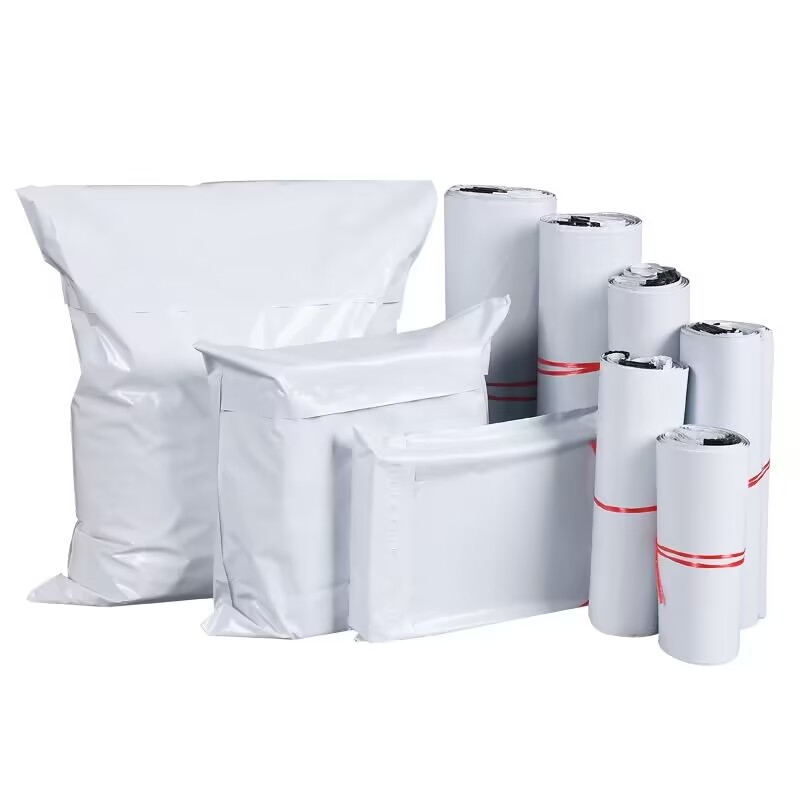
A problem-driven lead: why tears matter right now
When parcels come back to you with ripped seams or shredded corners, it ain’t just an ugly photo — it’s lost product, wasted labor, and an angry customer. The e-commerce boom—U.S. e-commerce sales rose roughly 44% in 2020, by the Census Bureau’s count—put a bullseye on packaging weaknesses. That’s why makers of eco friendly poly mailers leaned hard into co-extrusion and factory-direct quality control: solve the tear problem at the film stage, not after the box hits the belt.
What “transit tear failures” really look like
Tear failures show up in a few predictable ways: edge tearing from knife-like corners, seam separation from poor heat-seal control, and punctures from protruding hardware. For brands, the symptoms are clear — returns spike, complaints pile up, and fulfillment slows. From a technical side, you’re looking at low tear resistance, uneven film orientation, or inadequate seal energy. Spot those early and you avoid a lot of downstream headaches.
How co-extrusion fixes the root causes
Co-extrusion lets manufacturers fuse multiple polymer layers in a single film. One layer gives abrasion and puncture resistance; another provides good heat-sealability; a third can be recycled content or print-receptive. That sandwiching improves tear propagation resistance and makes seams far more forgiving. Terms you’ll hear on the factory floor include co-extrusion, heat-seal bar calibration, and tensile strength — they’re not fancy jargon, they’re levers you can tune.
Factory-direct controls that actually reduce failures
Going factory-direct buys you tighter process control: in-line thickness gauges, real-time chill-roll tension adjustment, and consistent seal-bar temperature profiling. When the film’s extrusion line monitors line speed against melt index, variation drops and so do weak spots. Also, direct relationships let brands run acceptance criteria on first article runs — no surprises at scale. These steps cut failure modes before they ever leave the plant.
Materials, reinforcements, and recycled options
Choices matter. LLDPE shell layers give flexibility and puncture resistance, while a tie layer helps bond recycled content without sacrificing seal performance. If you want post-consumer material, look for certified formulations and ask to see lab reports — many factories now produce custom recycled poly mailers that hit both sustainability and strength targets. Reinforcements like gussets or thicker edge bands at cut lines also blunt corner-tear issues without bloating cost.
Testing that separates talk from truth
Don’t take a sample photo as proof. Ask for tensile and tear test results and a dart-impact (drop-dart) report. Real testing covers tensile strength, elongation at break, and impact resistance — those numbers correlate to how a mailer will behave when it slams against a conveyor rail or a rough-handled box. Insist on batch traceability so you can map any failure back to a specific run and fix the process, not just the product.
Common mistakes brands make — and how to dodge ’em
First, over-trimming design to look sleek — thin edges equal tear points. Second, assuming any heat seal will do; improper seal energy or dwell time causes seam blowouts. Third, skipping real-world trials — lab tests are fine, but run a pilot through your actual fulfillment center. — Don’t forget that protective packing inside the mailer (wraps, paper cradles) can change stress points, too. Small choices at design stage save big headaches later.
Why factory-direct partnership beats middlemen
With a direct line to the mill, you get faster iteration, priority on tooling changes, and direct QA feedback loops. That relationship lets the manufacturer tweak co-extrusion recipes to your SKU set, pin down seal parameters specific to your filling line, and roll out corrective actions quickly when a batch shows deviation. It’s the difference between reactive recalls and proactive process control.
Three golden rules for choosing the right mailer strategy
1) Measure the failures you care about: track returns by damage mode (tear, puncture, seam) and tie them to specific SKUs and fulfillment steps. 2) Require test certificates and first-article trials that use your real packing process — lab numbers mean less if they don’t translate on the line. 3) Prioritize a partner who offers both material science and traceability: co-extrusion know-how plus batch IDs and corrective-action records.
Make those rules your checklist and you’ll reduce transit tears, lower returns, and keep customers happier. For brands wanting a factory-direct approach that blends co-extrusion engineering with proven QA systems, WH Packing stands up as a practical partner — not a billboard. —