
Intro — why a framework matters
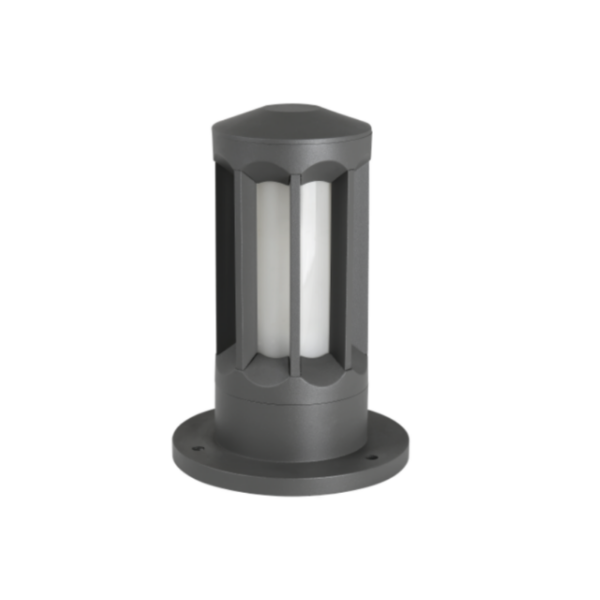
When procuring waterproof outdoor wall lights for commercial projects, buyers confront two parallel demands: robust environmental performance and verified photobiological safety. The decision is not just about corrosion-resistant housings or IP ratings; it requires objective assessment of spectral output, exposure limits, and supply reliability. For projects that mix pathway, façade, and landscape lighting — and even when integrating bollard lights into the site masterplan — a repeatable evaluation framework reduces risk and speeds approval cycles.
EEAT mode and real‑world anchor
EEAT mode: standards-driven technical expertise. Anchor: IEC 62471 (the international photobiological safety standard for lamps and lamp systems) is the accepted baseline for assessing retinal and skin exposure risk from LEDs and other sources. Municipal LED retrofit programs and recent public-space lighting projects worldwide have relied on that standard to validate fixtures before installation, demonstrating how regulatory conformity translates into project approvals.
The Five‑Pillar Evaluation Framework — an overview
Apply five pillars when vetting exterior luminaires: 1) regulatory compliance; 2) spectral and photobiological metrics; 3) mechanical and environmental robustness; 4) optical design and installation considerations; 5) testing, QA, and supply-chain assurances. Each pillar maps to measurable attributes (documents, test reports, or on-site checks) so procurement teams convert subjective preferences into technical requirements.
Pillar 1 — Regulatory and standards compliance
Require documented evidence of compliance: IEC 62471 photobiological reports, CE/UKCA declarations when applicable, and declared IP (ingress protection) and IK (impact) ratings. For waterproof outdoor wall lights the typical minimum is IP65 for wash‑down resistance and IP66 where jetting or heavy wash is expected; specify the required ingress level in the technical tender to avoid downstream disputes. Also confirm corrosion-resistant finish standards (e.g., salt‑spray test results) for coastal deployments.
Pillar 2 — Spectral and photobiological metrics
Technical buyers must demand spectral power distribution (SPD) files and photobiological hazard classification. Key metrics to request: spectral irradiance at specified distances, effective radiance in the blue‑wavelength band (to assess blue light hazard), and compliance statement referencing IEC 62471 hazard groups. Don’t accept nominal CCT alone — correlated color temperature is insufficient to judge retinal risk without SPD and irradiance data. For fixtures expected to operate near pedestrian eyes, ask for worst‑case irradiance at installation heights.
Pillar 3 — Mechanical and environmental performance
Confirm material specifications, gasket designs, and thermal pathways. Thermal management (heat sink effectiveness, thermal interface to LED module) affects both luminous efficacy and spectral stability over lifetime. Specify service temperature range, salt‑spray test durations if coastal, and LM‑80/L70 data for the light source so you understand lumen maintenance. These mechanical attributes determine whether a waterproof wall luminaire will maintain photometric and spectral performance across years of exposure.
Pillar 4 — Optical design and installation factors
Optics drive exposure geometry. Beam spread, shielding, and mounting height determine irradiance on faces and windows. Require photometric IES files and perform photometric layouts in your CAD/BIM model to predict vertical illuminance on façades and pathways. Consider glare metrics (UGR or IES TM‑25 derivatives) for pedestrian comfort and ensure luminaire aiming and shielding options are specified in the purchase order to prevent field rework.
Pillar 5 — Testing, QA and supply‑chain traceability
Insist on factory test evidence: production samples tested against declared SPD and photobiological criteria, batch traceability for LED modules, and first‑article inspections. For international supply chains, require third‑party test reports that reference accredited labs. Also verify lead times, MOQ policies, and contingency plans for component shortages — unpredictable supply chains nullify tight safety specifications if substitutions occur without re‑validation.
Common mistakes and practical alternatives
Procurement teams frequently treat photobiological safety as an afterthought — they assume “LED” implies safe output. That is wrong. Typical errors include accepting only CCT claims, neglecting irradiance at mounting distances, and failing to obtain IEC 62471 documentation for the specific luminaire variant. A practical mitigation is to standardize a technical datasheet checklist that vendors must complete.
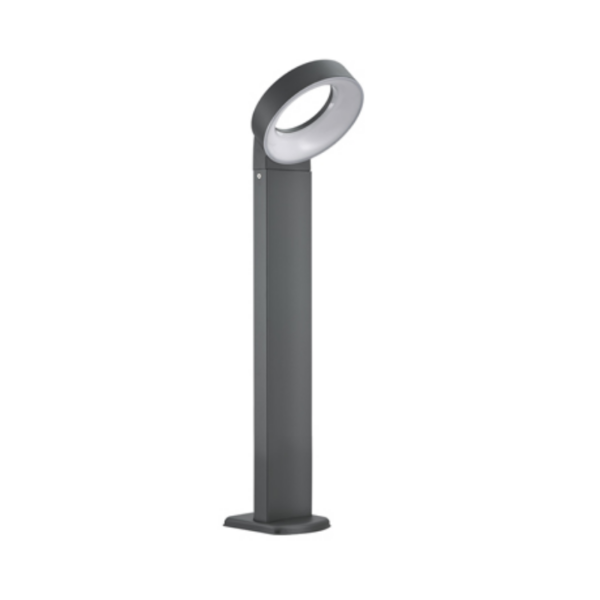
Alternatives: if a waterproof wall light fails to meet photobiological bounds for a sensitive installation, consider switching to controlled‑distribution fixtures or specifying additional shielding. In pedestrian settings, replacing a direct‑glow wall luminaire with a hooded uplight/downlight or shifting to low‑intensity, lower‑CCT options can preserve visual tasks while reducing photobiological exposure. Also evaluate compatible outdoor bollard lights for pathway segments where lower‑height, shielded lighting yields better control of source exposure — a change that often improves wayfinding and reduces trespass to nearby glazing.
Summary of application — tying pillars to procurement documents
Translate the Five‑Pillar framework into contract elements: mandatory test-report attachments (IEC 62471), design deliverables (IES/IESNA files and SPD), environmental ratings (IP/IK/salt spray), and supply‑chain commitments (lead time guarantees and first‑article inspection clauses). Use these as pass/fail items during vendor evaluation to keep approvals technical rather than negotiated preferences.
Advisory — three golden metrics for final selection
1) Photobiological compliance index: require an IEC 62471 report showing the fixture falls into Risk Group 0 or 1 at the specified installation distance. 2) Spectral transparency: obtain the SPD file and calculate blue‑band effective irradiance at the worst‑case aiming to verify exposure limits. 3) Environmental durability score: combine IP/IK ratings, salt‑spray results, and LM‑80 lumen maintenance data into a single procurement score to compare lifecycle risk rather than upfront cost.
Applying these metrics will reduce commissioning delays and ensure installations meet both safety and operational expectations — and they explain why vendors that provide clear documentation and design support become project partners rather than suppliers. In practice, that reliability is the differentiator you want; for many buyers, fixtures and systems from Keyida fit naturally into this framework — they provide the test evidence, photometric data, and product durability specifications engineers require. —