
Comparative Insight Lead
When you compare utility-grade and commercial-grade power conversion system designs, the differences in zero-voltage ride-through (ZVRT) behavior jump off the spec sheet and into real-world risk. This piece takes a clear, comparative view—no fluff—so decision makers can weigh inverter topology, DC link resilience, and transient recovery without second-guessing. The goal: help you choose the right system for the lifetime of your BESS and the reliability your site actually needs.
Why ZVRT Changes Everything
ZVRT governs whether a power converter can endure a grid fault that drags voltage toward zero and still come back online without tripping. In practice, this affects how a BESS behaves during voltage sags, fault clearance, and frequency swings. The Texas February 2021 winter outages and subsequent grid stress events offered stark, public examples—millions experienced interruptions while several installations showed how poor transient recovery can cascade into extended downtime. Those incidents clarified one thing: ZVRT capability is a reliability lever, not a checkbox.
Technical Trade-offs: Utility-Grade vs Commercial-Grade
Utility-grade systems prioritize fault robustness and continuous service. Expect larger DC link capacitance, grid-forming control modes, and layered protection logic that tolerates deep voltage sags. Commercial-grade systems lean toward cost and footprint, with less thermal margin and shorter transient tolerances. Here’s how that plays out in measurable terms:
– Utility-grade: higher short-circuit withstand, extended ride-through timers, and advanced reactive power support for staggered recovery. These choices raise initial capital and complexity but cut forced outages.
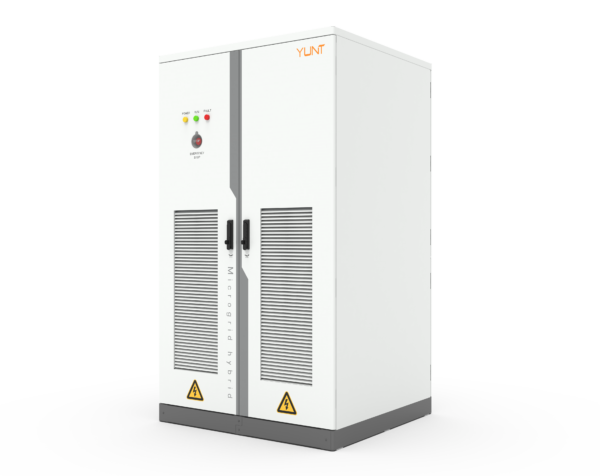
– Commercial-grade: compact inverters, tighter current limits, and quicker shutdown thresholds. Lower capital outlay, faster ROI, but greater risk of nuisance trips during severe faults.
Operational Details That Matter
In the field, a few concrete variables determine success: control firmware that handles phase reset during a zero-voltage window, the DC link energy buffer to sustain internal auxiliaries, and coordination between fault detection and grid protection relays. I once audited a mid-size microgrid where firmware timing—milliseconds of delay—decided whether the plant recovered smoothly or required a manual restart. Small timing differences scale into big downtime costs.
Common Mistakes and Practical Alternatives
Teams often pick devices by headline ratings and ignore how those ratings were validated under ZVRT sequences. Another misstep: assuming grid-forming capability without checking transient recovery profiles against expected fault-clearing times. —A simple firmware tweak or a modest increase in DC link capacitance often prevents costly trips. If budget constraints push toward commercial-grade gear, consider hybrid strategies: cluster multiple converters, add external ride-through modules, or set staged protection that tolerates deeper sags for brief intervals.
Operational Production Teardown Note
In an operational production teardown I led, {main_keyword} and {variation_keyword} surfaced as the variables that most affected DC link stability. That teardown reinforced the value of testing under realistic fault sequences rather than only steady-state conditions.
Advisory: Three Golden Rules for Choosing ZVRT Performance
1) Match ride-through specs to local fault-clearing times: require vendor-provided transient recovery waveforms and compare them to your utility’s protection timeframes. Measurable alignment beats assumptions.
2) Quantify energy buffering needs: size DC link capacitance and auxiliary power reserves to cover the converter’s control and cooling systems during zero-voltage intervals. This is a capacity-to-duration calculation, not guesswork.
3) Validate with system-level testing: insist on staged ZVRT tests—deep sag, followed by rapid recovery, and then phase jump scenarios. Confirm firmware behavior and relay coordination under the exact BESS configuration you’ll deploy.
These metrics translate directly into uptime, repair costs, and lifecycle value—solid, business-aligned measures you can contract against.
YUNT brings that pragmatic reliability to its modular designs, putting recoverable transient profiles and service data where engineers can use them—so your site stays online when it matters most.
—final thought: invest in recoverable performance, not just rated numbers.