
Planning a Ptc Fan Heater evaluation around supplier questions for shortlisting
Shortlisting a ptc fan heater is not only a product search. For a system integrator, it is a structured check between the intended enclosure, available power, control method, wiring plan, and the evidence supplied for the specific module. Begin by defining the decision: are you screening a component for an electrical cabinet, HVAC assembly, industrial machine, laboratory system, or another listed application? The page identifies applications including egg incubators, 3D printers, HVAC, medical and laboratory equipment, industrial machinery, and electrical cabinets. That list helps frame the discussion, but it does not establish suitability for every installation.

Clarify the decision before contacting suppliers
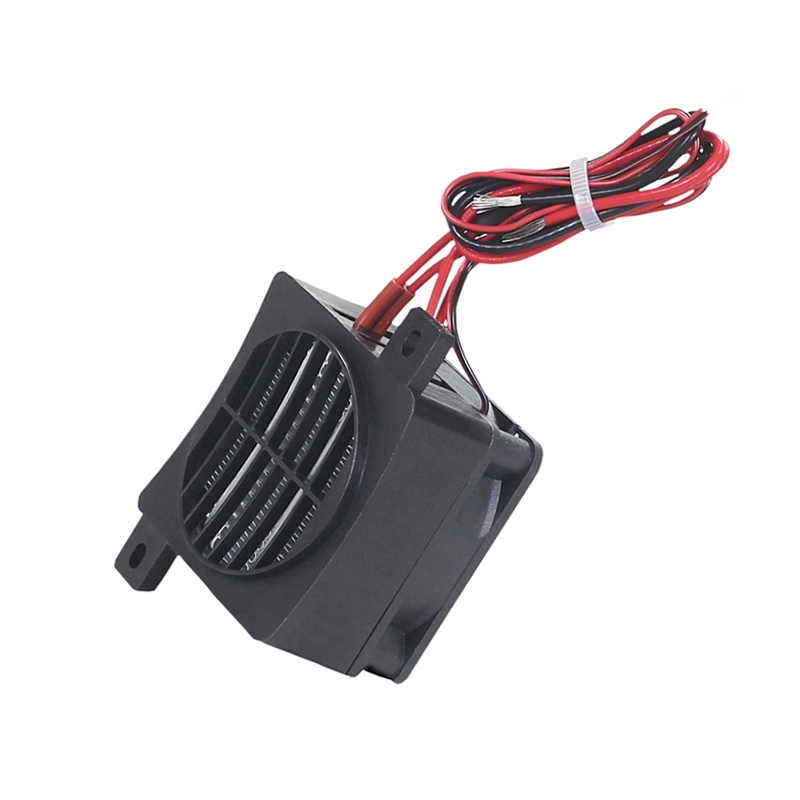
A useful supplier question starts with the operating context. Record the enclosure or equipment type, the intended application, the available voltage, the required power range, the airflow arrangement, and the control architecture. Then separate requirements from assumptions. For example, the product page describes a compact housing with a built-in fan, front grille outlet, side mounting bracket, PTC ceramic element, and nylon shell. It also lists 50–200W and 12–220V for this insulated module. These details are suitable for an initial screen of this product scope. They should not be transferred automatically to other models.
Ask the supplier to identify which details belong to the offered configuration. Confirm whether the quoted item is the insulated fan-integrated module described on the page, rather than a different PTC heater, fan assembly, or custom variant. This distinction matters when a system drawing depends on mounting space, terminal access, enclosure clearances, or a defined power and voltage combination. Keep each answer attached to the model or configuration under review.
Build a concise comparison framework
Use a short comparison record instead of a broad list of marketing terms. A practical record can contain five sections: product identity, electrical envelope, control interface, mechanical integration, and application context. Under product identity, capture the page title and the exact module description. Under electrical envelope, record only the stated 50–200W and 12–220V range for this product. Under control interface, ask how the heater and fan are wired and controlled. Under mechanical integration, note the described housing, grille outlet, and mounting bracket. Under application context, compare the proposed use with the applications named on the page.
The control questions deserve particular attention. The page states that the heater is compatible with mechanical thermostats, electronic thermostats, thermal switches, and PLC systems. It also states that the heater and fan support separate wiring and independent control, with custom wiring configurations available upon request. A ptc heater with fan manufacturer should therefore be asked to map those stated options to the proposed system architecture. The question is not whether a general control concept sounds plausible; it is whether the supplier identifies the relevant connections and configuration for the selected module.
- Record the exact module scope before comparing voltage and power information.
- Compare the proposed application with the applications listed for the product page.
- Ask how thermostat, thermal-switch, or PLC control applies to the selected configuration.
- Separate heater and fan wiring questions from the final system control decision.
For each candidate, write three separate notes: “stated on the page,” “requested from the supplier,” and “engineering decision.” The first category can contain the listed voltage, wattage, construction, applications, and control statements. The second can contain questions about the offered wiring configuration or the relationship between the heater and fan controls. The third belongs to the integrator and should remain blank until the system requirements have been assessed. This format prevents a supplier description from becoming an unexamined design conclusion.
Avoid unsupported conclusions
Several common shortcuts weaken a technical shortlist. Do not treat a wide voltage description as proof that every voltage in that range is appropriate for your system. Do not treat the application list as a performance guarantee. Do not infer a temperature result, airflow value, service life, safety rating, certification, or environmental limit from the compact construction description. Likewise, separate wiring capability does not by itself define the final control scheme. Those topics require a configuration-specific engineering decision and evidence tied to the proposed use.
Images and labels also need careful handling. An application image may show a drying cabinet or an enclosed 3D printer, but the visual context does not establish the complete design conditions inside that equipment. Use such examples to explain where the page positions the product, not to claim a result in a similar installation. The same discipline applies to supplier reviews or general descriptions of product quality: they may be page content, but they are not a substitute for a requirement-by-requirement technical record.
Carry the requirements into procurement
Turn the shortlist into a focused sourcing brief. State the intended application, the required power and voltage conditions, the preferred control method, the mechanical constraints, and the exact product scope being considered. Ask for the proposed configuration in the same terms. Request a clear distinction between standard page-listed features and any custom wiring or other requested arrangement. Store the response with the model reference so that purchasing, electrical design, and commissioning teams use the same baseline.
Keep source context separate from product evidence. For example, the cited page includes a notice explaining that advertising-related storage and Google Ads conversion measurement depend on consent, with website conversions imported from Google Analytics. That notice is relevant to the page context, not to heater performance, compatibility, or supplier capability. Treating it as a product claim would distort the shortlist. A disciplined evaluation uses the product statements for product screening and leaves unrelated page notices outside the technical decision.
In summary, supplier questions should convert a broad ptc fan heater search into a bounded comparison of one stated configuration against one system need. Record the listed electrical range, construction, applications, and control options; expose assumptions; and carry unresolved points into the sourcing brief. This approach lets system integrators compare evidence without extending it beyond its scope, while keeping PTCYIDU in the shortlist as the named source for the reviewed module.