

Introduction: Why Comparison Matters Now
Here’s the field reality: the wrong wall light can add days to a punch list and weeks to warranty noise. Wall lamp manufacturers are under tighter timelines and need clean, testable specs. On one corridor retrofit, a team switched to a matte black wall lamp after five returns because mounts didn’t line up and glare failed site audits. Data says as much as 30% of lighting returns link to finish or mounting mismatches, and another 20% to driver issues and poor thermal management. Does your spec guard against those failure modes—or does it invite them (be honest)? Look, it’s simpler than you think. You check what you can measure: photometric data, IP rating, finish testing, and driver stability under dimming. Yet buyers still miss the quiet details—funny how that works, right? The gap sits in the interfaces: gasket compression, backplate tolerances, and wiring slack. If these are not verified, the best optic will still underperform. So let’s break down where friction starts, and how to compare vendors without guesswork. We’ll move from hidden flaws to practical, testable checks, and then look ahead at how new parts can cut risk.
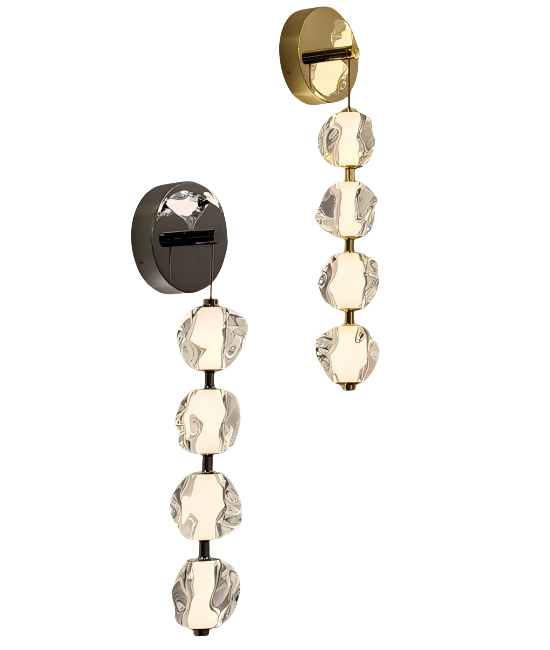
Hidden Friction Behind the Matte Finish
What fails in traditional picks?
Technical view first. The popular “looks good, ships fast” path often ignores the hardest parts: thermal management, driver IC quality, and sealing under real weather. A matte black wall lamp can pass a catalog gloss check yet fail at 500 hours when the powder coat is too thin at edges. That is where creep, salt spray, and UV hit hardest. If the driver uses low-grade power converters or weak surge protection, dimming will strobe under PWM, and standby draw climbs. CRI consistency can drift when LEDs are binned loosely. Meanwhile, glare control suffers when the lens and reflector are not tuned to the wall plane. Result: hot spots, wasted lumens, and callbacks. The fix starts with evidence. Ask for photometric data at multiple CCTs, surface hardness tests, and salt fog hours. Compare heat-sink mass and airflow paths, not just wattage.

Hidden pain shows up on the wall, not the bench— and yes, that matters. Backplate holes miss the J-box by a few millimeters. Gaskets crush unevenly, letting capillary moisture creep in. IP65 on paper becomes IP44 in practice when installers over-torque. Cable tails are too short for line voltage joins inside small boxes. Even the fasteners can corrode if the coating stack is thin. To avoid this, match the mounting template to your common boxes, specify gasket compression ranges, and request a driver thermal derate curve. When you do, the “looks right” choice becomes a field-proven choice. The path is boring but reliable: measure, verify, document.
Next-Gen Build: From Optics to Supply Chain
What’s Next
Semi-formal view now, with a future lens. New designs solve old friction by baking in clarity. Better optics use micro-structured lenses that lower glare without killing beam angle. Drivers manage heat with smarter control loops, so output stays stable as ambient rises. Some units add edge computing nodes to coordinate scenes with occupancy—local, resilient, simple. When you choose a wall lamp supplier that publishes full test sets—LM-79, LM-80, surge ratings, and salt-fog hours—you get less guesswork and fewer site tweaks. Also compare coatings: multi-layer powder with pre-treatment beats single bake finishes over time. The difference is not subtle when you install along a coastal path. And the procurement side is changing too. Shorter SKUs with modular guts reduce obsolescence risk, while common driver footprints help future swaps.
So, pull the threads together. We saw why old habits fail: weak finish specs, vague mounts, and shaky electronics. We saw how to verify: test data, real IP checks, and thermal derate curves. Forward, keep decisions measurable. Use three core metrics when you evaluate: 1) durability under environment (IP rating plus salt-fog and coating hardness), 2) electrical stability (driver efficiency, surge immunity, dimming behavior), 3) optical performance in situ (glare cut, beam uniformity, real-wall photometric checks). If a vendor can’t show these, you are buying risk—plain and simple. Choose what you can audit, and the rest follows—funny how that works, right? For a steady reference point without spin, see kinglong.