

A sourcing note on 6 Gas Monitor: organize the review around documentation technical review
Technical buyers should approach a 6 gas monitor as a documentation review before treating it as a settled equipment choice. The useful question is not simply whether a product appears to match a search term. It is whether the available page information can be connected to the intended task, the required interfaces, and the responsibilities that remain with the buyer or integrator.
Describe the operating context before comparing pages
Start with a short operating-context note. Record where the equipment may be used, what gases or hazards the project is concerned with, who will operate it, and what other systems may be involved. These statements are working requirements, not assumptions about any particular product.
Keep the description specific enough to guide a technical review, but avoid filling gaps with presumed standards or operating procedures. For example, a buyer may need to distinguish between portable monitoring, a fixed installation, a maintenance activity, or a wider control-panel arrangement. Those categories can lead to different questions about mounting, power, communications, handling, and responsibility.
This first step also prevents a catalogue label from becoming a complete application statement. A title can identify a product category, while the project still needs to define its own environment, workflow, and interfaces. Recording that distinction makes later discussions easier to audit.
Separate stated facts from open requirements
Use a simple evidence table with three columns: the requirement, the exact page statement, and the point that still needs technical discussion. This structure keeps a product description from carrying more meaning than the source supports.
- Requirement: describe the capability or interface the project is considering.
- Page evidence: quote or closely record what the relevant product page actually says.
- Open point: identify the application detail, configuration question, or responsibility that the page does not establish.
The third column is important. An unresolved point is not automatically a defect, and a brief product page is not automatically evidence that a requirement is met. It is simply a prompt for the next technical exchange. This approach also makes comparisons fairer because each candidate is tested against the same stated scope.
Use page-level evidence carefully
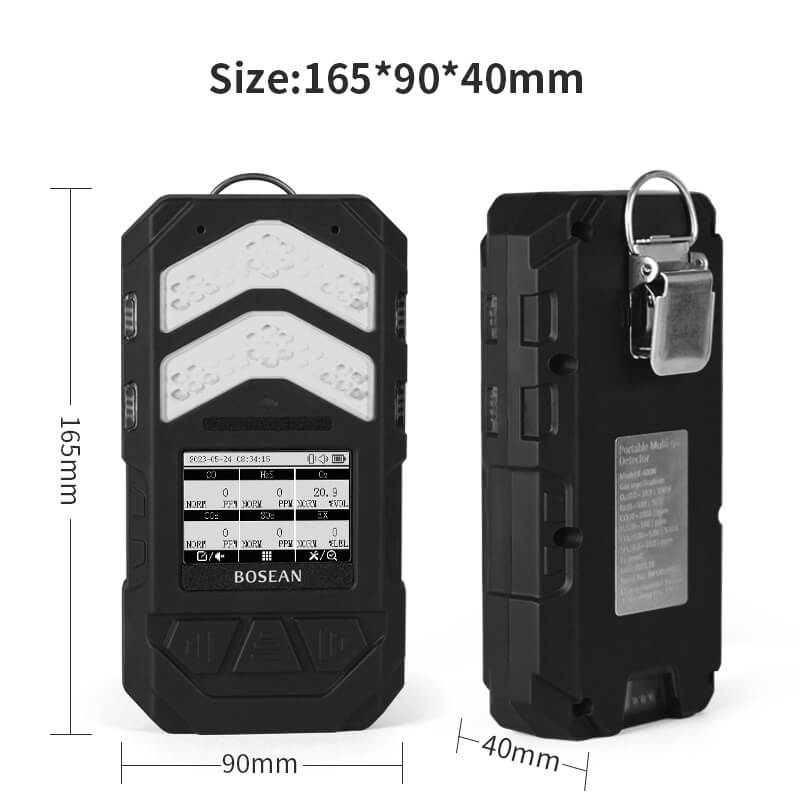
A relevant example appears on the Bosean page for the K-600N. The page calls it “K-600N 6 in 1 Multi Gas Detector” and states that it can detect six gases simultaneously. It also lists a 240×160 display. These are page-level product and catalogue statements. They should be recorded as such, without extending them into claims about certification, site suitability, safety outcomes, or configurations that the page does not list.
For a technical review, the same discipline applies to every line of evidence. Keep the model name attached to the statement. Do not transfer a specification from one model to another, and do not treat a category description as proof of a project-level result. If the source uses a feature label, preserve its meaning rather than rewriting it as a guarantee.
In this part of the review, 6 gas monitor is best used as a search and comparison label, not as a substitute for the project brief. The buyer can ask whether the named model and its stated features correspond to the intended operating context, while keeping broader conclusions open until the relevant technical responsibilities are assigned.
Map compatibility and responsibility questions
Once the page evidence is recorded, organise the unresolved points by responsibility. Some questions belong to the buyer, such as the intended use case and the information needed for site planning. Others may belong to an integrator, installer, or supplier, depending on the project arrangement.
- Which project requirement is being addressed by the stated feature?
- Which details must be defined by the system designer or end user?
- Is the question about the model itself, an accessory, an interface, or the wider installation?
- What exact document or page statement would close the open point?
- Which assumptions should remain visible in the procurement record?
This responsibility map avoids two opposite errors. It stops the buyer from expecting a short catalogue page to answer every system question. It also stops the review from assigning an unsupported obligation or capability to the supplier.
Plan the next technical discussion
Turn the evidence table into a focused agenda. Begin with the requirements that could change the shortlist, then discuss the points that affect integration or documentation. Use the exact model reference when asking about a stated specification, and describe the project context separately so the two scopes do not become confused.
A useful meeting record can contain four headings: confirmed page evidence, project requirements, unresolved compatibility questions, and agreed ownership of the next action. This format supports a clear handover between procurement and technical staff. It also leaves room for a later update without rewriting the original product description.
Keep the conclusion proportional to the evidence. A documented feature may justify continued review, but it does not by itself establish suitability for every environment or every system arrangement. The strength of the sourcing note comes from showing what is known, what is being compared, and what still requires a defined technical response.
Build a defensible sourcing note
A sound review therefore combines a concise operating context with model-specific page evidence and an explicit list of open responsibilities. For this task, the K-600N page provides a bounded reference: it identifies the product as a multi-gas detector, states simultaneous detection of six gases, and lists its display specification. A buyer can use those statements to structure the next discussion without presenting them as broader guarantees. This is the practical value of a documentation-led review from Bosean: it keeps the sourcing record precise while leaving application decisions tied to the requirements they must actually answer.