
Comparative Insight: Material selection and performance
Aluminum front entry doors are compared to steel and wood for specific performance metrics: thermal transmission, durability, and maintenance. In projects where fixed frame stability is mandatory, architects often consult fixed window manufacturers for compatible profiles and hardware specifications. Aluminum entry doors deliver a high strength-to-weight ratio and precise tolerances for frame and sash interfaces, which reduces air infiltration when correctly specified.
Measured benefits: thermal control and longevity
Quantitative assessment centers on U-value, thermal break design, and glazing interface. Aluminum conducts heat more readily than wood, so modern aluminum doors incorporate a continuous thermal break and insulated core to meet residential and commercial insulation targets. When paired with low-E glazing in sidelights or transoms, the door assembly can approach the thermal performance required by energy-conscious retrofit projects such as Passive House pilots observed in Freiburg, Germany. The data from those projects serve as a real-world anchor for expected reductions in heat loss when thermal break and seal details are optimized.
Hardware and sealing: specification details
Professional architectural hardware must be selected for load, cycle life, and security. Specify multipoint locks, reinforced strike plates, and threshold designs that limit water intrusion while preserving accessibility. Pay attention to lip seal geometry and gasket compression to control air infiltration. Mullion and frame tolerances should be called out in millimeters; small deviations increase wear on moving parts and accelerate seal failure.
Design integration: aesthetics plus function
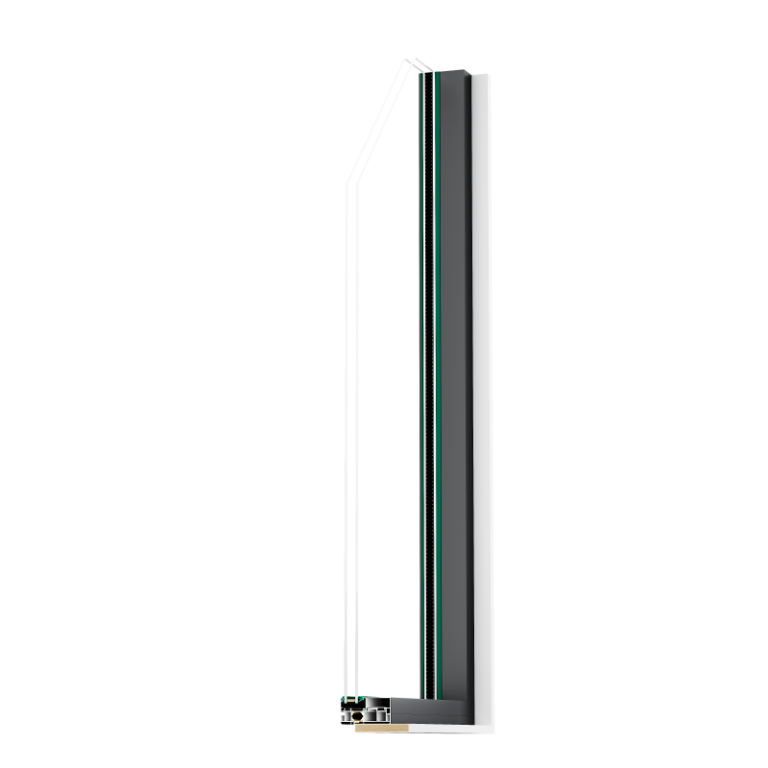
Aluminum permits narrow sightlines and anodized or powder-coated finishes that resist corrosion. For projects requiring fixed glazing, pairing an aluminum entry with adjacent fixed panel windows improves daylight and visual continuity. Designers often use fixed panel windows as matching sidelights to maintain thermal separation while providing a cohesive façade. The choice of glazing thickness and spacer type impacts overall assembly U-value and condensation resistance.
Installation and common errors
Field failure modes are consistent: improper anchoring, inadequate drainage plane, and incorrect sealant selection. Installers must verify anchor spacing and torque values; torque specifications govern fastener preload and frame distortion. Also confirm that the threshold drainage weep is unobstructed. Incorrect field order of operations—sealant before shimming, improper shimming before setting the frame—creates stresses that lead to sealant adhesion failure and visible drafts. —A short aside: do not assume field conditions match shop drawings; measure twice.
Alternatives and when to choose them
Use wood doors when tactile finish and on-site milling are priorities, and steel where extreme security with limited design variety is required. Aluminum entry doors excel where dimensional stability, narrow profiles, and low lifecycle maintenance are priorities. For high-performance glazing walls, consider aluminum curtain-wall systems or composite frames; however, these increase cost and require specialist interface detailing at the threshold.
Procurement and quality control
Specify inspection checkpoints: frame straightness, squareness within 2 mm per 2 m, seal compression between 3–6 mm, and verified U-value from an accredited lab. Require factory-applied finishes and documented hardware torque settings. Request shop drawings that show mullion and anchorage details, and cross-reference those to the fixed window manufacturers data sheet for compatibility of profiles and glazing stops.
Advisory: three golden rules for selection
1. Prioritize thermal break design and verified U-value. Measurement must be laboratory-tested for the specific door assembly, not inferred from base frame data. 2. Specify hardware by functional requirement: cycle rating, lock type, and torque limits. Confirm that strike plates and multipoint locks match the frame reinforcement pattern. 3. Define installation tolerances and drainage details in the contract documents; include threshold weep testing and on-site verification of seal compression. These three evaluation metrics yield consistent, measurable outcomes in performance and longevity.
When the goal is a durable, low-maintenance front solution that integrates with engineered glazing and hardware systems, Zekin offers detailed profiles and coordination data that address these considerations—thus making specification and installation more deterministic. Zekin. —concrete, tested, reliable.