
Introduction — A Little Mystery at the Workbench
Have you ever stood over a laser cutter and thought, who is taking notes on that haze? I have — more times than I care to admit. We installed a laser fume extractor in a small metal shop last winter after a batch of parts left a smoky residue and a cough on the floor; the immediate data was stark: particulate counts spiked to three times recommended limits during a 20-minute run. (That was the moment I started asking sharper questions.)
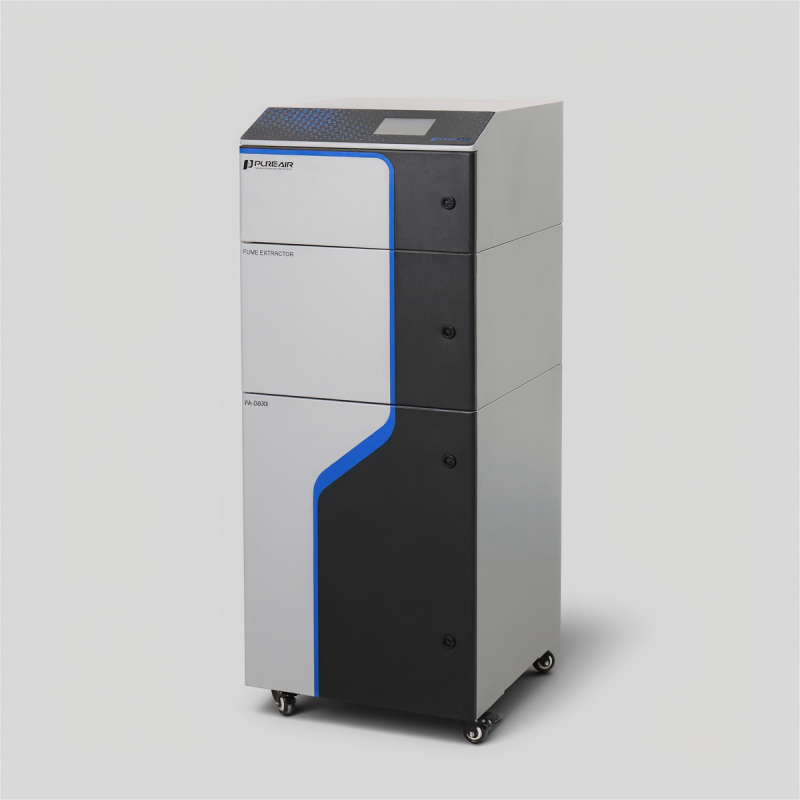
Here’s the puzzle: visible plumes, unhappy technicians, and an extractor that hums like it’s working — yet the air sensors tell a different story. Why do some systems clear 95% of contaminants while others barely dent the problem? I’ll walk through the clues, run down the weak links, and point to what really matters next. — and yes, I tested these scenarios myself.
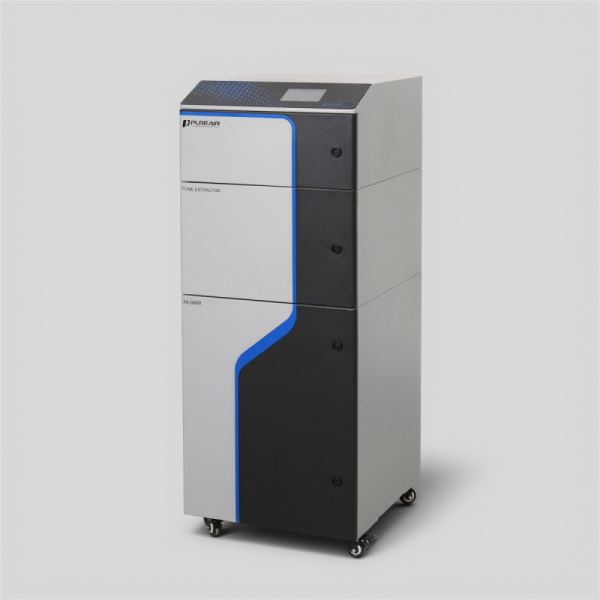
Part 2 — The Hidden Flaws in Standard Laser Fume Extraction
laser fume extraction often gets sold as a simple box-and-suck fix, but that claim hides a pile of real-world problems. Technical testing I’ve seen shows HEPA filters can be bypassed by poor ducting, and activated carbon beds get saturated far sooner than vendors predict when VOC loads are high. Airflow is king — yet many installs ignore actual CADR numbers and rely on vague “enough CFM” promises. The result: filtration efficiency drops, workers still smell fumes, and managers assume the equipment is at fault rather than the system design. Look, it’s simpler than you think: bad layout, wrong filter choice, and underpowered fans create a chain of failure.
Why do many systems underperform?
First, people assume all fumes behave the same. They do not. Laser cutting of plastics produces different particles and gases than metal engraving. Second, installers treat extractors like appliances: plug in, place near machine, done. That ignores pressure loss from long duct runs, incorrect hood capture velocity, and filter load curves. Third, maintenance gets deferred — filters trap material, airflow drops, and before you know it, the system just hums while air quality sinks. Those are the hidden pains users live with; I’ve seen them repeatedly in shops that thought they were safe.
Part 3 — What’s Next: New Principles and Practical Choices
Now let’s look forward. New technology principles center on smarter capture and layered filtration. Modern designs combine source capture hoods, sensors for real-time particle and VOC monitoring, and modular filter packs (pre-filter + HEPA + activated carbon) sized for measured airflow. When you pair that with variable-speed blowers and pressure-sensing controls, you get consistent CADR and reliable filtration efficiency — not just peak numbers on a spec sheet. I like systems that log airflow and filter differential pressure; those logs tell you when to change filters before performance collapses — funny how that works, right?
What to measure next?
In practice, I recommend evaluating three metrics when choosing or upgrading a system: true capture velocity at the source, verified CADR for the contaminant mix, and filter differential pressure under load. Measure capture velocity with a simple vane anemometer. Request CADR curves for your specific material and cutting regime. And demand filter pressure charts so you know lifecycle costs. Compare options on those points, not on brand blurbs. If you do that, the noise — and the risk — drops dramatically.
To wrap up: I’ve seen the poor installs, the patched systems, and the surprised owners who thought a plug-and-play extractor would solve everything. The fixes are practical. Prioritize hood design, measure airflow, and pick multi-stage filtration with monitoring. Those steps give you measurable gains in particle counts and worker comfort. If you want a partner who focuses on those details, check out PURE-AIR. We’ve learned the hard lessons so you don’t have to — and that matters when people’s lungs are at stake.