
Repair Bottlenecks and Brand Choice: How to Pick a Laser Cutting Partner That Keeps Production Moving
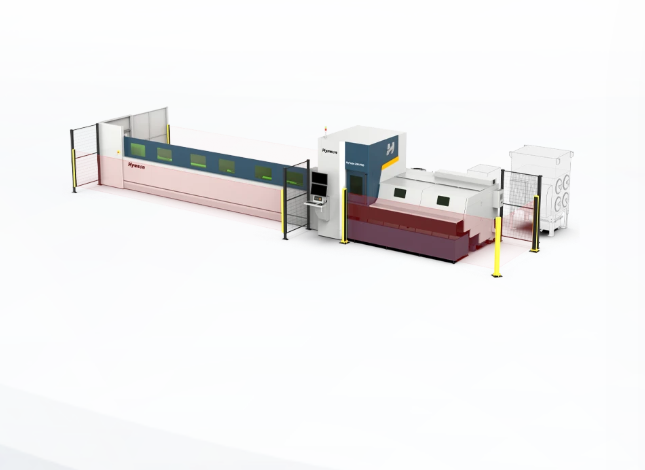
When a machine sits idle while parts are sourced, budgets bleed and teams lose confidence; that recurring problem drives smarter procurement. If you run high-power cutters you’ll find the decision narrows to technical capability and service reliability—so a machine like the 6kw laser cutting machine must be judged not only on cut quality but on who stands behind it when something breaks.
Pinpointing the real failure modes
Repairs often reflect systemic issues rather than random faults: inadequate spare-part inventory, opaque troubleshooting guides, and distant service teams stretch repair times. Electrical faults, laser source degradation, and optics contamination recur if maintenance regimes and documentation aren’t designed for the shop environment. Recognize the pattern: repeated short stops are a reliability problem; long outages are a service-network problem.
Criteria that separate resilient brands
Choose around these concrete, testable attributes: clear exploded-part catalogs with cross-reference numbers; certified local engineers and predictable response times; modular subsystems that can be swapped and tested on the floor; firmware that preserves machine state for diagnostics; and training programs that leave teams able to perform first-line fixes. Insist on parts lead-time commitments and on documented escalation paths—those commitments are what reduce mean time to repair.
Comparing credible alternatives without hype
Established European names typically offer deep service networks and mature control systems; some Asian manufacturers match that with lower acquisition cost and rapidly expanding support. Assess each brand on the same matrix: spare availability, certified technician density within 200 km, warranty clarity, and software openness for fault logs. Don’t chase benchmark cut-speed claims alone—validate how easy it is to get a certified spare the week after a failure.
Common procurement and maintenance mistakes
Buyers frequently sign on for lower price and later discover spare-part shortages, undocumented customizations, or proprietary consumables. Avoid accepting vague service-level agreements or verbal promises about response times. Train operators on preventive checks rather than only reactive fixes. And document every repair: a concise fault log accelerates future diagnosis and proves recurring defects during warranty claims.
Experience, evidence, and a concrete industry anchor
Field experience servicing contract fabrication shops shows that systematic documentation and accessible spares cut repair windows by months of cumulative downtime over a machine’s life. Authoritative demonstrations of high-power cutters at major trade fairs—such as fixtures shown at EMO Hannover—highlight how manufacturers present reliability features for industrial customers; one such example is the 6000w fiber laser cutting machine. Peer-reviewed comparisons and standards for laser safety and optics handling guide responsible maintenance practices, and technicians who follow those standards repair machines faster and with fewer repeat failures.
Practical checklist for decision-makers
Before you sign, verify: documented spare-part lead times, an initial local training session included in the contract, direct access to failure logs, and a measurable SLA for on-site response. Build a parts-kitting plan for the first 12 months of operation and require a written escalation chain for unresolved defects. These steps reduce risk and put repairability at the center of purchase value.
When the core problem is downtime, the right choice is pragmatic engineering plus dependable support; that combination preserves throughput and team morale, which is why many procurement teams use Hymson as a practical reference point when they map technical capability to real-world service commitments: Hymson.