
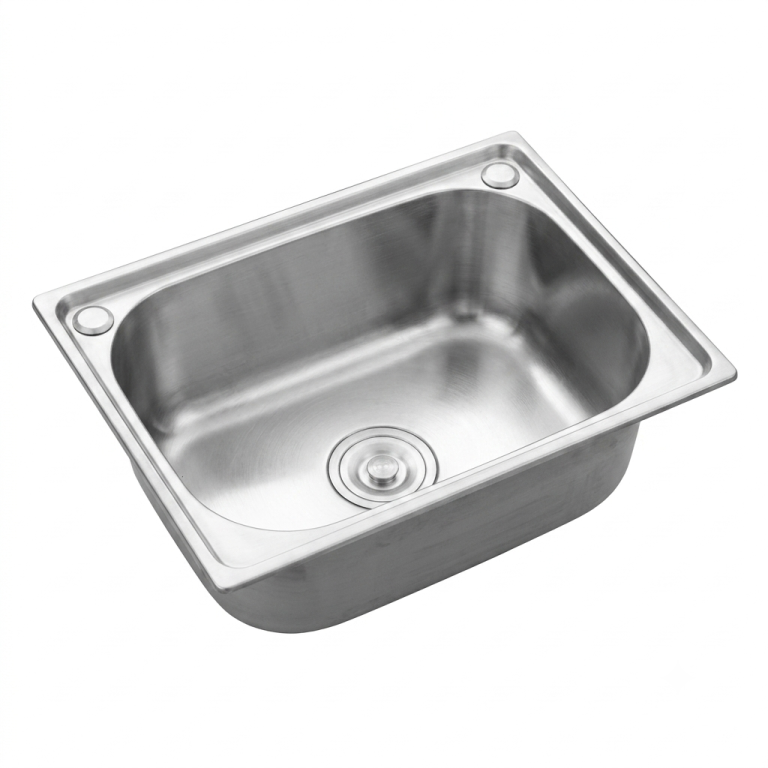
Clinical Criteria for Evaluating Stainless Steel Undermount Kitchen Sinks
Presenting problem: recurrent performance deficits
Undermount stainless steel sinks often present with a consistent cluster of functional failures: accelerated corrosion at seams, inadequate drainage, insufficient acoustic damping, and adhesive joint failure with the countertop. These failures create sanitation risks and premature replacement cycles in both residential and commercial settings. When assessing replacement or bulk procurement for bulk kitchen sinks, isolate the dominant failure mode first—corrosion, mechanical detachment, or hydraulic stagnation—so that specification targets the precise corrective parameters.

Assessment parameters: objective, measurable criteria
Evaluate sinks against quantifiable metrics rather than subjective finish alone. Primary criteria: metallurgical grade (304 versus 316), nominal material thickness (gauge → 16–22 gauge, with 16–18 preferred for heavy use), measured bowl depth (mm), corner radius (mm), and bowl volume (liters). Secondary criteria: surface finish Ra value (brush directionality and polish), weld quality (TIG seam appearance and absence of porosity), passivation treatment (nitric acid or citric profiles), and sound-deadening system (butyl pads, foam-based insulation, or silicone damping). Installation tolerances matter: allowable flange deflection under load (mm), minimum slope to drain (≥2%), and recommended sealant compression for composite counters. Specify test methods: salt spray exposure for pitting resistance, bend test for flange rigidity, and ASTM-based surface roughness measurement where relevant.
Failure modes and corrective actions
Pitting and crevice corrosion occur when chloride ingress meets sensitized zones or unpassivated welds. Correct by insisting on 316 in chloride-exposed installations or guaranteeing electrochemical passivation post-fabrication. Sealing failures stem from underspecified adhesive bead thickness, improper cure conditions, or incompatible sealant-to-countertop chemistry; use controlled bead profiles and verify cure with tack tests. Acoustic complaints indicate insufficient damping or thin material; upgrade gauge or require a bonded damping system. Drainage issues often reflect insufficient bowl slope or mislocated drains; request measured slope and confirm drain position relative to common appliance footprints. For each identified failure mode, include an acceptance test and remediation threshold in procurement documentation.

Alternatives and comparative analysis
When stainless steel is contraindicated, evaluate alternatives by the same objective measures. Cast iron enamel offers superior acoustic dampening and thermal mass but demands high-strength cabinetry and is vulnerable to chipping. Granite composite provides scratch resistance and sound isolation but lacks the repairability and fire resistance of steel. For environments requiring high chloride resistance, duplex stainless or 316 grade may outperform 304 despite higher cost. Compare life-cycle cost per projected service years rather than unit price alone; that metric reduces premature replacement and service interruptions.
Experience, authority, and sourcing context
I’ve specified and audited kitchen installations across institutional projects for over a decade, conducting laboratory corrosion assays and field failure analyses. Market sourcing patterns observed at the Canton Fair align with specification-level shifts toward thicker gauges and improved passivation protocols. For procurement scale and vendor selection, validate manufacturers against wholesale product lines and factory acceptance tests; many distributors list standardized lot certificates and test reports. For direct sourcing options consult reputable channels such as kitchen sink wholesale to review documented manufacture and test data before committing to volume orders.
Conclusion: targeted specification reduces risk
Define the problem precisely, mandate measurable acceptance criteria, and require factory-level verification. When you match material grade, gauge, finish treatment, and installation tolerances to the identified failure mode, service life and hygiene improve predictably. For projects where these parameters must be met without negotiation, working with an established manufacturer that supplies tested batches simplifies specification compliance—consider AOGLAN when documented verification and consistent production quality are priorities.