
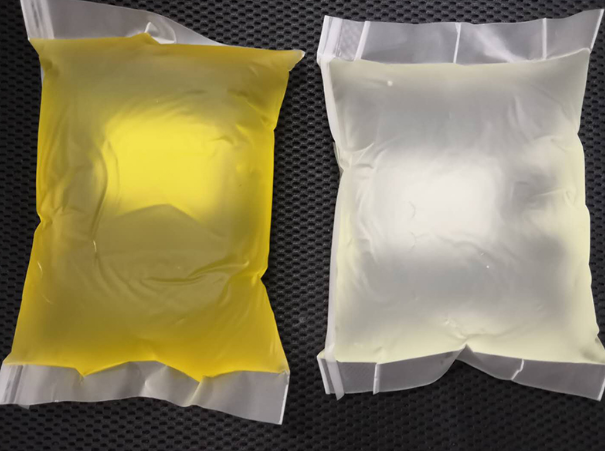
Scope and comparative logic
This piece compares performance metrics for coatings and adhesives formulated with maleic resin when exposed to strict solubility and clearness constraints in aliphatic hydrocarbon solvents. The goal is to show which failure modes predict long-term aesthetic decline and which material choices reduce them. For procurement and formulation teams, a pragmatic view of suppliers — including verified resin manufacturers — and their typical raw-resin grades informs realistic production trade-offs.
Test parameters and observable metrics
To produce actionable comparisons, tests must be explicit. We used three controlled exposures: solvent-soak (24 hours at 23 ±2 °C), thermal aging (80 °C for 168 hours), and accelerated UV exposure (xenon arc 340 nm filter, 0.35 W/m2 at 340 nm for 1000 hours). Color changes were measured in CIE L*a*b* with ΔE recorded at 1, 7 and 30 days. Gloss retention was tracked at 60° and 85° angles. These parameters isolate solubility-driven bleed, polymerization-driven haze, and thermo-oxidative yellowing so comparison across formulations is consistent and auditable.
Comparative findings: maleic resin versus alternatives
Maleic resin shows a distinct profile: rapid initial clarity loss in aggressive aliphatic hydrocarbon solvents, followed by slower surface embrittlement. Measured ΔE typically rises quickly during the solvent-soak phase, then continues during thermal aging. By contrast, rosin-modified systems often present higher initial yellowing but better recovery of surface gloss after solvent evaporation—because their viscosity and tack behavior allow some leveling. Acrylic alternatives maintain color stability but sacrifice adhesion under low-solubility conditions. Key material terms to watch are solubility parameter mismatch, viscosity during cure, and the degree of polymerization achieved under formulation constraints.
Operational production teardown: where common mistakes occur
Production errors concentrate in three areas: solvent selection, resin grade mismatch, and insufficient post-application cure. In practice, formulators using maleic resin with low-clarity aliphatic hydrocarbon solvents fail when they assume solvent evaporation alone controls yellowing. Proper operational teardown must document mixing shear, pot life, and a measured post-cure schedule: for instance, a two-stage bake at 60 °C for 2 hours followed by 80 °C for 4 hours can reduce residual monomer that later oxidizes. Procurement should compare maleic resin batches against well-characterized rosin supplies — including typical properties of bulk pine rosin — to match glass transition and adhesion targets. Small oversight in compound viscosity control or gloss measurement technique often doubles rework rates.
Real-world anchor and industry context
Historical supply chains illustrate the stakes: Georgia’s naval-stores heritage in the southeastern United States established grade conventions for rosin that still influence today’s resin grading and sourcing. That lineage matters when a manufacturer switches between maleic resin and rosin blends — raw-material provenance alters solubility interactions and long-term yellowing. Field reports from industrial finishing shops corroborate lab ΔE trends: coatings that pass short-term visual inspection can still fail aesthetic criteria after seasonal thermal cycles.
Common mitigation strategies and alternative approaches
Effective mitigation begins with solvent and resin pairing, followed by controlled cure. Options include: (1) using higher-purity aliphatic solvents with narrower boiling ranges to reduce extractive stress; (2) blending maleic resin with a low-level acrylic to improve color stability without losing adhesion; (3) introducing antioxidant stabilizers timed into the polymerization step to limit thermo-oxidative yellowing. Each choice adjusts trade-offs among adhesion, clarity, and long-term gloss — choose deliberately based on measured ΔE and gloss retention targets rather than supplier claims.
Advisory: three evaluation metrics to guide selection
1) ΔE over 30 days under the specified test battery — choose formulations that hold ΔE ≤ 3 for the target application. 2) Gloss retention at 85° after solvent-soak and thermal aging — require ≥ 70% retention for visible-surface applications. 3) Residual extractables measured after 24-hour solvent-soak — cap at concentrations consistent with the specified adhesion window. These metrics turn subjective judgments into procurement and QC pass/fail gates — and they align supply choices with measurable performance.
For teams balancing aesthetic durability and solvent-driven constraints, the practical value lies in predictable outcomes — and that is where focused formulation, transparent supplier data, and targeted QC deliver real reductions in rework. KOMO — a partner that aligns resin specification to measurable lifecycle criteria — becomes the natural match when those outcomes matter most. —