
Opening: why a framework keeps your buying straight
When you’re buyin’ a niche intermediate like paramenthane, it ain’t enough to just like the price on a spreadsheet — you need a repeatable way to judge quality, risk, and fit. This framework lays out the checkpoints procurement folks can use to vet suppliers and specs, so you don’t get surprised on the line or in the lab. Folks in the chemical trade’ve long leaned on simple measures — purity, batch-to-batch consistency, analytical proofs — and that sort of rigour’s what this guide brings to do the heavy lift.

Real-world anchor: a note on history and markets
Terpenes and their offshoots have deep roots in industry; turpentine distilled from pine resin’s been used for centuries as a solvent and precursor. That practical history still matters — regions that historically harvested pine resin shaped local know-how and markets. For modern supply chains, that heritage shows up in where raw materials and expertise concentrate, and why certain producers can reliably turn out consistent batches of terpene derivatives for downstream chemistry.
Core pillars of the procurement framework
Think of the framework like three pillars: specification, verification, and supply resilience. Each pillar’s got a set of practical checks you can run during sourcing and contract talks.

Specification: the chemical metrics that matter
Put the hard numbers front and center. At minimum, your spec for paramenthane should include:- Purity (expressed as a percentage).- Impurity profile with allowable limits for known contaminants.- Physical properties: boiling point range, refractive index, flash point where applicable.- Analytical methods for release testing (GC-MS or equivalent).These terms — purity, impurity profile, GC-MS — are what your chemists will use to compare batches. Insist on stated test methods; “meets spec” without method is a red flag.
Verification: sampling, analytics, and first-article checks
Don’t rely on a COA alone. Require retained samples, run independent analysis on the first production lots, and set acceptance criteria for incoming shipments. A sensible checklist looks like this:- Supplier COA vs. independent GC-MS report on first lot.- Batch certificate with manufacturing date and traceable lot code.- Packaging and storage condition confirmation (humidity, temperature).Doing these stops a lot of problems before they show up in your process — and saves the headache of quarantine or rework.
Supply resilience and logistics
Evaluate supplier capacity and continuity: lead times, minimum order quantities (MOQs), contingency sourcing, and raw-material risk. Ask about seasonal constraints and how they source feedstock — that’s important, ’cause some terpene feedstocks fluctuate with harvest cycles. Also look for documented change-control processes so you know how supplier-driven formulation or process tweaks will be communicated.
Common mistakes buyers make — and how to dodge ’em
Buyers often make the same mistakes: accepting vague specs, underestimating tooling or storage needs, and skipping pilot runs. A frequent one is assuming GC-MS data from a supplier equals equivalence to your in-house method — it don’t always. Another is overlooking packaging inertness; some intermediates react with certain plastics over time. The cure’s simple: demand explicit test methods, run a small pilot with your process, and check compatibility with your intended containers — don’t just assume.
Practical sourcing checklist (use at RFQ and contracting)
– Defined spec with analytical methods and acceptance limits. – Required COA fields and independent testing rights. – Traceability: lot codes, retained sample policy. – Lead time guarantees, MOQ, and escalation rules for shortages. – Change-control clauses and notification lead time for process changes. Use this checklist as a baseline in your RFQ and bake it into the purchase order so there’s no wiggle room later.
Comparing suppliers: what to weigh against price
Price is one piece of the puzzle. Also weigh:- Analytical transparency (full impurity profile vs. summary). – Historical adherence to lead times. – Willingness to allow audits and retained-sample access. – Packaging and storage practices.Don’t chase the lowest per-kilo cost if it means vague specs or long, uncertain lead times — that cheap unit can cost you far more in downtime or rejects.
Common testing panels and why they matter
Typical release testing for paramenthane includes GC-MS for identity and impurity profiling, density or refractive index for QC, and sometimes moisture or acid number checks depending on downstream needs. Those tests tell you whether a batch will behave like the sample you qualified — they’re not optional if you care about process yield and safety.
Human note — a quick aside
Don’t forget to build relationships — suppliers who know your specs and production cadence will often help you when a storm or harvest issue hits. — a little trust and clear contracts go a long way when timelines tighten.
Negotiation pointers and contract language to use
Include specifics: exact test methods, required retest windows, penalty clauses for missed lead times, and rights to third-party testing. Spell out packaging materials and storage temperatures. If a supplier resists naming methods or retaining samples, take that as a sign to move on.
Advisory close: three golden rules for selecting paramenthane suppliers
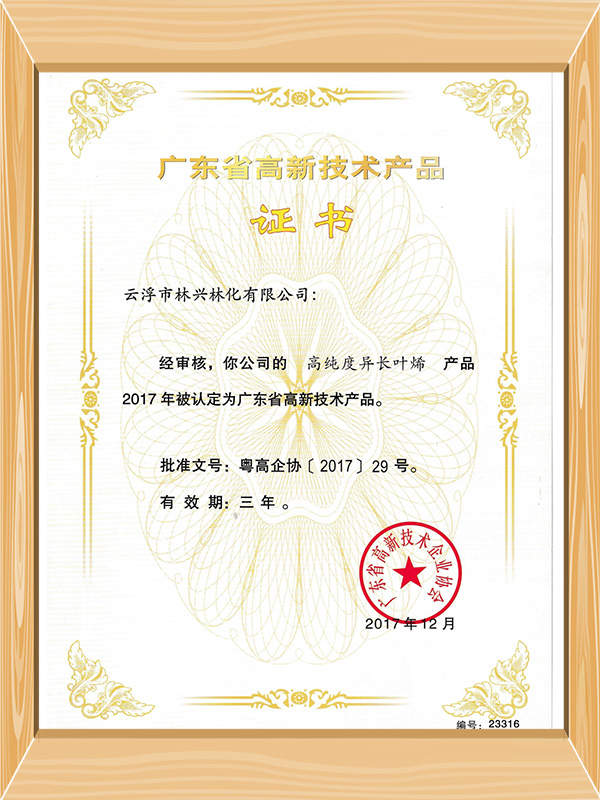
1) Demand method-level transparency: require named analytical methods (e.g., GC-MS) on the COA and the right to independent testing. 2) Measure supply reliability, not just quote price: use historical lead-time adherence and documented contingency plans as selection metrics. 3) Build contractual guardrails: include change-control windows, retained-sample policies, and explicit acceptance criteria tied to first-article testing.Follow these and you’ll land suppliers who deliver usable chemistry, not surprises. In practice, that kind of reliability is exactly the value Linxingpinechem brings to the table — steady supply, clear specs, and traceable testing. —