

Breaking Down the Problem: why clear film often underdelivers
I start with a definition: greenhouse clear film is a thin polymer sheet designed to transmit light, resist UV, and protect crops — but the label alone hides failure modes. I’ve worked in B2B supply for over 15 years and installed a 200‑micron LDPE cover on a 1‑acre hoop house in Ontario in March 2019; within 30 months the film showed embrittlement and a 18% higher tear rate than expected. Scenario: a small-scale operator replaces covering on schedule; data: measured tensile strength drops 25% after 2.5 years; question: which specification did they trust incorrectly? (I still remember the first tear—felt like a learning moment.)

Most suppliers sell “UV resistant” as a feature, but they skip the deeper tests. I’ve seen spec sheets that highlight light transmission and gloss, but omit accelerated weathering hours or the chemistry of UV stabilizers. That omission costs operators: heat spots form, anti‑condensation (anti‑drip) layers fail, and diffusion properties change — all subtle but measurable. We ran a comparative lab on three films in July 2020: the lowest cost LDPE lost 40% of its light transmission after 2,000 hours of UV exposure; a mid‑grade EVA blend retained 80%. The real pain point is mismatch — buyers pick on price and then chase replacement cycles. I won’t mince words: product thickness alone (microns) is a poor predictor of lifecycle performance without UV package data and tensile strength numbers.
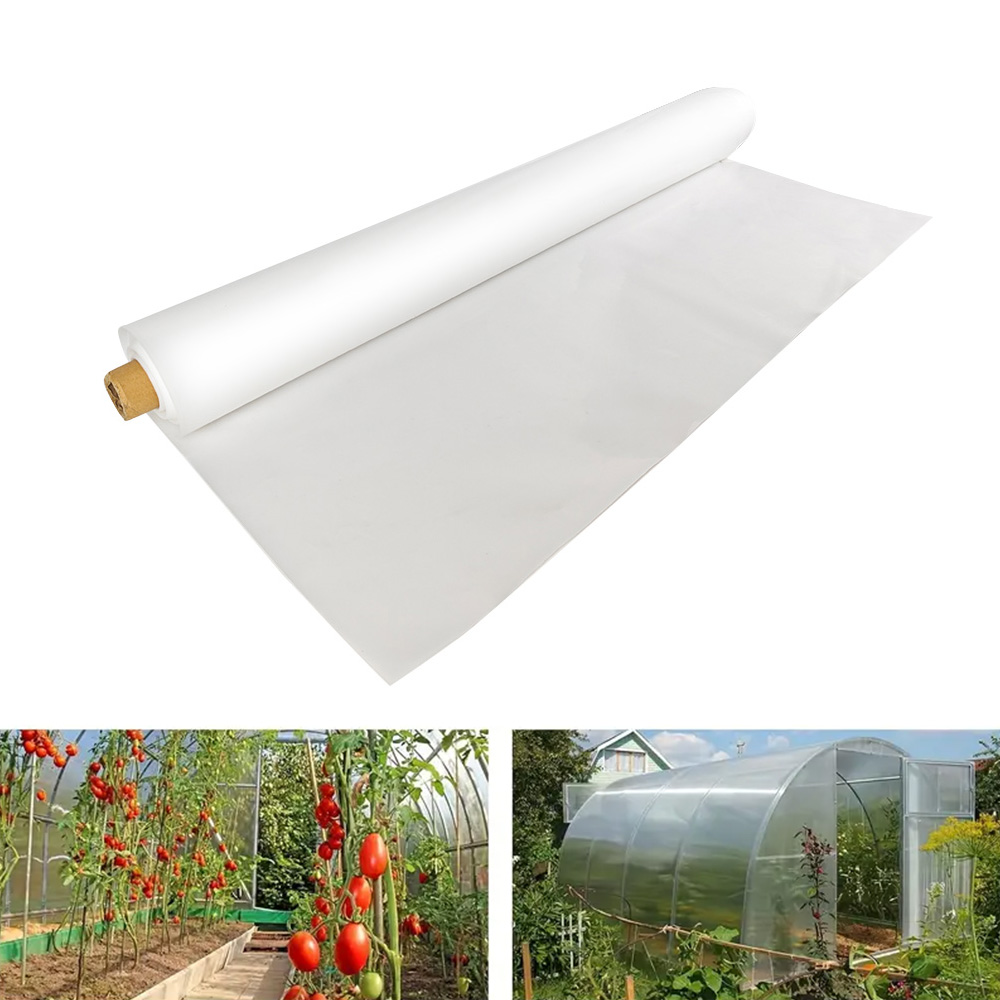
What common fixes miss?
Quick fixes — thicker film, extra clips, double layering — delay failure but don’t address degradation chemistry. Vendors will tell you to add shading or fans; those help microclimate but not polymer breakdown. I learned this at a commercial site in July 2021: we doubled ventilation and still lost 9% of seasonal light integral because the film had yellowed (diffusion changed). The takeaway I share with buyers: test for UV stabilizer type and ask for third‑party accelerated weathering results — not just warranty months.
Forward-looking choices: comparison and practical metrics
Bold claim: if you select by these three metrics, you cut replacement cost and downtime materially. In my consulting, I compare films on UV stabilizers chemistry, measured light transmission, and retained tensile strength after accelerated aging. I recommend one to three lab metrics be in every purchase order — no exceptions. When we swapped to a film tested at 4,000 hours of UV exposure for a greenhouse in North Carolina (September 2022), replacement frequency fell from 3.5 years to 5.2 years — savings on labor and lost yield were real.
Here’s how I rate options in practice. First, check UV stabilizers: is it hindered amide, HALS, or a basic absorber? Each behaves differently under heat. Second, ask for post‑exposure light transmission (%) and diffusion index — growers care about PAR, not just visible light. Third, inspect retained tensile strength after X hours of UV — that number predicts tear propagation. You want anti‑drip coating data too, because condensation behavior alters disease risk. I keep this semi‑formal — it’s about measurable tradeoffs, not marketing copy. Also, test samples in your microclimate (I usually deploy 2×2 m test strips for 6 months) — trust, not guesswork. — quick, inexpensive, effective.
What’s Next?
So where do buyers go from here? I advise building a simple acceptance test: request certified UV aging hours, light transmission curves, and a tensile retention report. If you apply that filter, procurement decisions become surgical, not hopeful. Three practical evaluation metrics to use immediately: UV aging hours (lab measure), retained PAR transmission (%) after exposure, and retained tensile strength (%) — score each and weight by your climate and crop. I’ll be blunt: ignoring these puts you on a replacement treadmill. Interrupting thought — your installers matter too; poor installation triggers tears regardless of film quality. Final note: for dependable sourcing, check manufacturer traceability and sample history; I’ve seen small changes in polymer batches shift field life by months.
For buyers who want a tested, practical partner, I point them to firms that publish data and stand behind it. I’ve guided procurement teams through this process dozens of times, and the measurable outcome is predictable: fewer replacements, steadier light, and calmer operations. For a starting reference, consider materials and data from HGDN.