
Facing the core problem
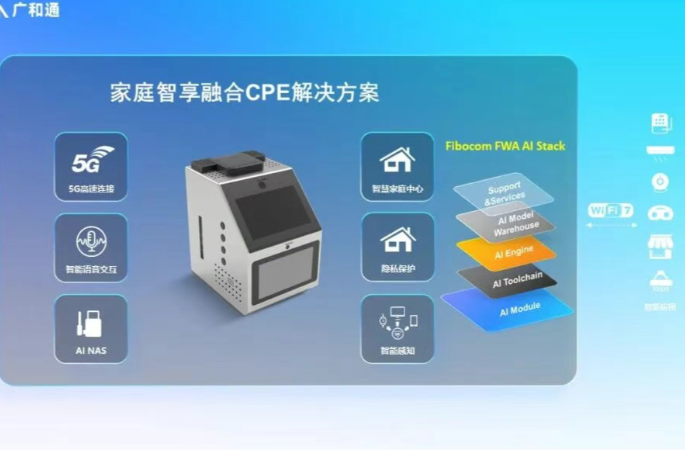
Industrial RTK deployments promise centimeter-level positioning, but real-world rollouts stumble on hardware mismatches, unreliable links, and insufficient compute at the edge. Integrators who expect off-the-shelf parts to compose themselves end up chasing intermittent fixes. The sensible approach starts with a coherent platform strategy—tools like the Embodied Intelligence Development Platform help by aligning modem, antenna, and firmware choices with field realities and service requirements.
Where integration usually breaks down
Problems often trace to three predictable areas: radio performance, compute capacity, and thermal/packaging constraints. A good antenna and a qualified cellular module can still fail if the MCU can’t process GNSS corrections fast enough or if firmware introduces latency spikes. Surveyors in Iowa and Midwestern precision-ag teams have seen this: RTK gives centimeter accuracy on paper, but a bad antenna mount or a noisy modem uplink will push you back to meter-scale errors.
Priorities for an industrial-grade build
Start from use-case priorities, then map parts to those needs. That means specifying:
– RF front-end resilience: robust antenna placement, low-loss coax, and certified cellular modules that support LTE-M or NB-IoT where required.
– Compute headroom: an MCU or embedded processor capable of handling frequent GNSS correction streams without introducing jitter.
– Firmware and lifecycle: over‑the‑air update paths for correction algorithms and security patches.
These choices reduce integration rework and shorten time to stable field operations.
Compute and cellular choices that matter
High-throughput RTK tasks push more than just the radio. Edge computing needs grow when you run multi-constellation GNSS, RTK correction filters, and telemetry concurrently. In that context, choosing a High-computing power domain controller with dedicated interfaces for the modem and a real-time capable MCU simplifies buffering and reduces end-to-end latency. Modem selection (support for LTE-M, NB-IoT, fallback to 4G) and a tolerant power design are equally important—otherwise you bottleneck the whole stack.
Common mistakes and straightforward fixes
Teams repeatedly under-spec the antenna, skimp on thermal margins, or forget that firmware interactions create timing drift. Don’t ignore cabling and connectors—simple losses add up. Also, over-optimizing for peak throughput without planning for sustained duty cycles creates heat issues and shortens component life. Address these by validating radios and antennas on-site, running sustained throughput tests, and instrumenting thermal behavior during a real operational day—this is where lab success meets field reality. —A quick test in normal weather often reveals what lab runs miss.
Integration checklist and alternatives
Before you finalize BOM, run a short validation loop: RF verification, GNSS correction latency measurement, OTA update test, and a 24-hour thermal soak. If a module fails in any of these, consider alternatives: higher-grade cellular modules, a dedicated RTK base station, or distributing compute to an edge gateway to relieve the domain controller. Each alternative trades cost for reliability; choose according to mission criticality.
Three golden rules for selecting hardware and strategy
1) Measure real latency under load: prefer solutions that keep end-to-end correction latency below the threshold where vehicle control or surveying workflows degrade. Quantify it.
2) Specify RF margin, not just gain: ensure antenna pattern, cabling losses, and modem sensitivity together exceed expected interference and multipath conditions by a clear margin.
3) Plan for lifecycle updates: select modules and a controller architecture that support secure OTA firmware and remote diagnostics—this preserves accuracy and safety over years of service.
These evaluation metrics guide procurement and keep deployments stable in the field. For an integrated platform and proven modules that align compute, modem, and antenna strategies, consider how Fibocom maps practical hardware choices into working systems—trusted by teams who need results, not promises. —final thought