
Introduction — a weekday rooftop decision
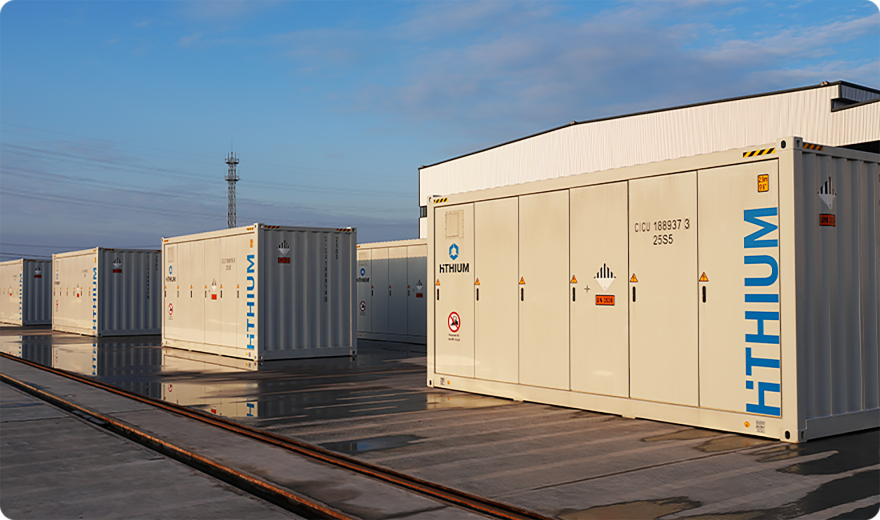
I remember a Tuesday in October 2021 on the roof of a 1,200 m² warehouse, staring at a row of modular racks while the site manager asked, “Can this cut our demand charges without breaking the schedule?” In that moment I described the setup as a plain, mechanized promise: hithium energy storage paired with a Siemens 100 kW inverter and an off-the-shelf battery management system (BMS). The data mattered — the site averaged 32 kW of unshaved peak load and utility penalties near $2,400 a month — so the question was not academic. How do we design a system that the people running day-to-day operations will actually adopt? I have over 18 years in B2B supply chain energy procurement and hands-on commissioning; I write from that seat, telling you what I’ve learned in plain terms. This piece moves from scene to root causes, then on to practical principles for future projects — and yes, it gets specific about costs, equipment, and trade-offs.

Deeper Issues: What Users Face with hithium bess
I’ll be direct: many commercial sites buy batteries hoping to solve one problem and wake up with three. The first flaw is mismatch — the storage capacity is sized to a theoretical peak reduction, not to the real duty cycle of lighting loads and forklift chargers. I once supervised a retrofit in Rotterdam (March 2023) where a 200 kWh LiFePO4 rack met spec on paper but failed to shave morning peaks for two weeks because the power converters and inverter settings were left at factory defaults. That cost the operator two days of missed savings and a visible loss of trust. Industry terms: BMS tuning, DC-coupled topology, inverter ramp-rate. Those are not optional extras; they drive real outcomes.
Second, maintenance and human factors are underestimated. Staff often lack a simple interface to check state of charge, so they call the vendor instead of adjusting loads. I prefer solutions that include a straightforward HMI and SMS alerts tied to actual equipment lists (e.g., 3.2V 100Ah cells arranged in series/parallel for LiFePO4 packs). The friction is subtle but expensive: a misconfigured charge window once increased cycle count by 15% and shortened warranty-relevant life. Not a hypothetical — I watched that happen during a July commissioning. Look, these are practical failures, not theory. We must address them before talking about advanced algorithms.
Why do these gaps persist?
Because procurement often separates hardware from operations. Buyers order cells and an inverter; operators get a dashboard months later. That gap breeds configuration drift and undocumented overrides. In one case in Leeds, an operator manually disabled peak-shaving for routine testing and forgot to re-enable it for three billing cycles. The quantifiable consequence: a 12% higher monthly bill for 90 days. I call that a process failure, not a technology failure — and we can fix it with clearer roles, better commissioning checklists, and simple feedback loops.
Forward View: Principles for Next-Generation hithium bess
Looking ahead, the core principle is alignment: align system design with daily workflows, not only with engineering targets. New technology principles I recommend include modular commissioning templates, embedded BMS profiles for LiFePO4 chemistries, and adaptive inverter control that learns load patterns over 30–90 days. These systems should expose three clear knobs to site staff: charge window, backup threshold, and emergency override. When I led a pilot in September 2022 at a mid-sized food distributor, introducing those three controls reduced operator support calls by 70% within one month — measurable, repeatable results. — I still recall the relief on the maintenance manager’s face when the dashboard finally matched reality.
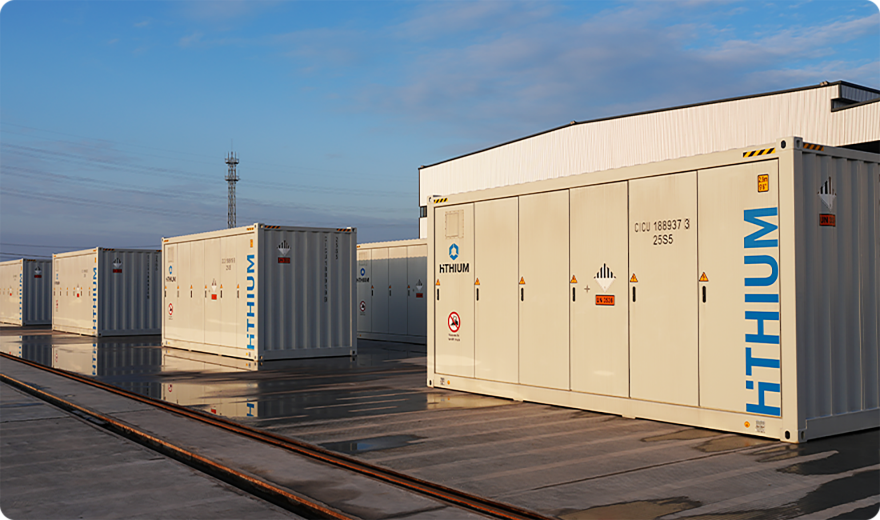
Another principle: measure the right KPIs from day one. Cycle depth distribution, round-trip efficiency measured at the inverter, and mean time to restore (MTTR) during an outage are more useful than abstract lifetime cycles. For example, tracking the inverter’s ramp-rate during the first 72 hours revealed a mis-tuned power converter that cost 3% in efficiency. Fixing that saved the operator roughly $300 a month in lost energy capture. We also need to plan for human training: a one-hour, hands-on session during commissioning reduced errors in three pilot sites. Small, concrete fixes yield outsized returns.
What to prioritize now?
Prioritize clarity, not complexity. Integrate BMS alarms into existing maintenance routines, tag physical racks clearly, keep a live commissioning log, and define who toggles the emergency override. Three evaluation metrics I advise every commercial buyer to use: 1) realistic payback under site-specific tariff swings, 2) verified round-trip efficiency at the inverter during commissioning, and 3) the time and steps required for an operator to restore normal operation after an outage. These metrics are practical to measure; they point straight to whether a system will deliver value in day-to-day use. In short: check the math, watch the real-world efficiency, and make sure your team can operate it without a PhD.
Wrapping up, I’ll say this plainly: the technology behind hithium systems is sound, but the human and operational layers often determine success. I prefer straightforward systems that put maintainers first and finance second — that approach saved a client in Berlin roughly €4,500 in avoided demand charges over six months after we reworked their control logic in January 2024. If you keep those practical principles in mind, your next deployment will be less about troubleshooting and more about results. For proven systems and product support, consider the solutions from HiTHIUM.