
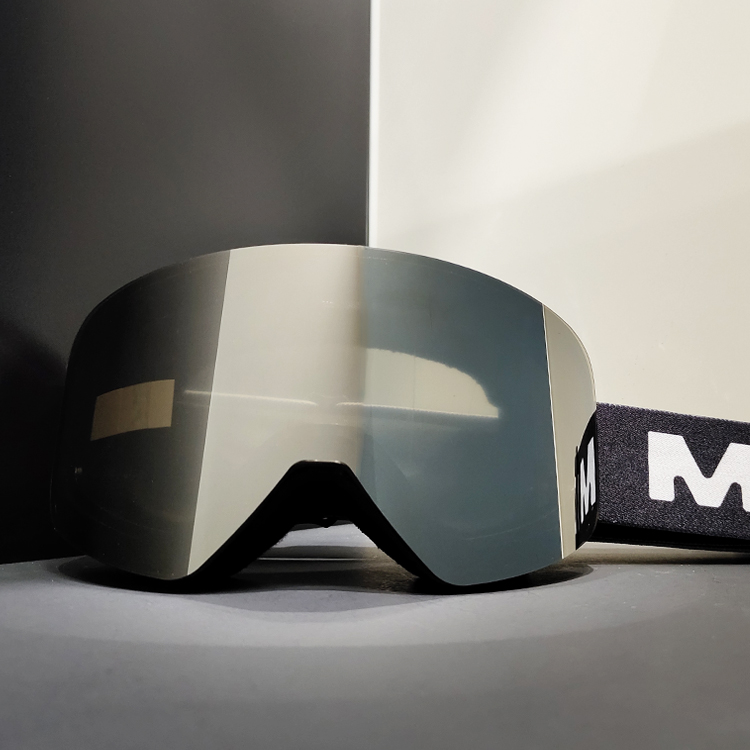
Problem: Thermal shock on the slopes
Cracking lenses after a day in mixed weather is an avoidable disaster for high-performance goggles. Skiers, guides, and gear makers face rapid temperature swings—from chairlift shade to bright summit sun—that push materials through steep thermal cycling and create microfractures. OEM design choices matter; that’s why forward-thinking OEM eyewear manufacturers set test protocols around temperature ranges, antifog coating behavior, and magnetic lens system tolerances.
How YIJIA recreates extreme climates in the lab
The core tactic is blunt: reproduce the worst conditions and watch materials fail. YIJIA Optical runs repeated thermal shock tests where lenses move between sub-zero chambers and warm baths, monitoring for substrate delamination, crazing, and loss of UV transmission. Sensors measure strain while technicians record optical distortion. The process is tactile—first the brittle snap of a poorly bonded polymer, then the faint fog that betrays a weakened seal. Testing couples impact resistance checks with heat cycles so a lens that survives a drop at 10°C still proves itself at −30°C.
Design moves that prevent cracking
Materials and geometry work together. YIJIA limits internal stresses by matching thermal expansion coefficients between frame and lens and by engineering a flexible gasket that absorbs differential movement. Anti-crazing resins and layered substrates resist crack initiation, while a magnetic retention system reduces point loads that concentrate stress at the lens perimeter. Another layer—coatings engineered for adhesion at extreme temperatures—guards against delamination and preserves antifog coating performance.
Field validation: Alps runs to Arctic patrols
Lab success only matters if it survives the mountain and the field. YIJIA sends prototypes to alpine testers in the French Alps and to cold-weather units training where temperatures dip below −40°C—real-world anchors that prove longevity. Lessons translate across contexts. Military units that specify military tactical goggles demand similar standards: low optical distortion under glare, robust magnetic lens system retention, and consistent UV transmission despite repeated thermal cycling. These deployments expose subtle failure modes that a bench test might miss—edge microfractures that grow under repeated flex, or coatings that craze after salt-spray exposure.
Common mistakes and better alternatives
Designers often choose one bright solution and neglect trade-offs. Thick lenses increase impact resistance but amplify internal stress during rapid temperature swings; rigid frames reduce wobble but transfer load to the lens edge. YIJIA’s alternative is balance: moderate lens thickness with multilayer substrates, compliant mounting points, and strategic venting to equalize internal pressure without inviting fog. Field teams prefer this layered approach—it keeps clarity longer and reduces in-season failures.
Advisory: three golden rules for selecting thermal-resilient goggles
1) Verify thermal cycling protocols: demand tests that span at least −40°C to +40°C and include humidity swings so you catch antifog coating failures. Industry terms to check for: thermal cycling, substrate delamination, optical distortion. 2) Inspect the lens-frame interface: look for compliant gaskets and distributed magnetic mounts that avoid concentrated edge stress. 3) Require field validation: prototypes should log hours in representative locations—the Alps, Arctic training, or high-altitude ski patrols—to confirm lab metrics translate to service life.
Those rules give measurable expectations: fewer mid-season replacements, preserved optical clarity, and predictable impact resistance—outcomes that matter to pros and manufacturers alike. YIJIA Optical understands that science and craft must meet on the mountain. —