
Quiet problem, loud consequence
The press hums like a patient heart, but when platen parallelism drifts the rhythm falters — gauge uniformity suffers and parts whisper flaws. In many shops the fault begins small: a few microns of tilt, a subtle change in clamping force distribution, and suddenly cure uniformity and dimensional tolerances wander. For teams moving into liquid silicone work the transition is palpable; they often upgrade to an lsr molding machine and still confront the same brittle truth: alignment matters more than brute force.
How misalignment ripples through the molding cycle
Platen parallelism governs the way a mold cavity meets the world. If faces are skewed, injection pressure meets uneven resistance, shot size packing behaves unpredictably, and heat flows differently across the part. The result is not just one bad sample — it’s a patterned variance across runs: thicker edges, slack seals, and inconsistent durometer readings. This is where manufacturers lose yield and trust, especially in regulated sectors guided by ASTM D2000 classifications for rubber materials.
Detecting the fault with modest instruments
You need simple precision: feeler gauges, dial indicators, and thermal imaging can map the problem without heroic expenses. Place a dial indicator at four quadrants of the platen and record deviations under static and dynamic loads. Thermal scans during cure reveal hotspots that correlate with parallelism errors. Log readings across shifts; trends tell you whether the issue is mechanical wear, hydraulic drift, or fixturing errors. Keep language plain on the shop floor and the team will act quickly.
Tactical fixes that restore symmetry
Start with the obvious: tighten maintenance intervals for tie bars, check for burrs on guide rails, and rebalance clamping circuits. If hydraulics show pressure drop, adjust or replace valves to regain consistent clamping force. For stubborn cases a shim-and-scan method works—apply controlled shims, retest with dial indicators, then refine. For liquid silicone processes, verify that gate design and venting complement the corrected platen geometry; sometimes mold redesign is the right investment rather than endless mechanical shims.
Common mistakes and better alternatives
Shops often respond with overcorrection: increasing clamping force without fixing platen tilt, or chasing vendors with new controllers while ignoring worn guideways. Those are costly detours. A pragmatic path is layered: measure, then repair, then validate with production trials. Alternatives include modular platens that allow micro-adjustment, or precision-finished tie bars to reduce cumulative play. Where automation helps, integrate closed-loop sensors that track platen tilt in real time — it’s a modest cost for big stability gains.
Brand and machine selection through a problem-driven lens
Choose machines that make alignment visible and serviceable. Look for accessible tie-bar bearings, clear mounting points for dial indicators, and control systems that log clamping force. When considering a liquid silicone rubber injection molding machine, prioritize those with documented alignment tolerances and local service footprints. Real-world experience from automotive sealing lines in Detroit shows that repeatability often beats raw speed: steadiness yields fewer rejects and steadier supplier relationships.
Advisory: three golden metrics for assessing solutions
1. Platen flatness variance (target under 0.05 mm across the platen under load) — this predicts gauge uniformity. 2. Clamping force consistency (coefficient of variation under 3%) — this keeps cure profiles steady. 3. First-pass yield after alignment corrections (aim for >95%) — this is the practical payoff. Use these metrics to compare retrofit options, mold redesigns, or machine replacements.
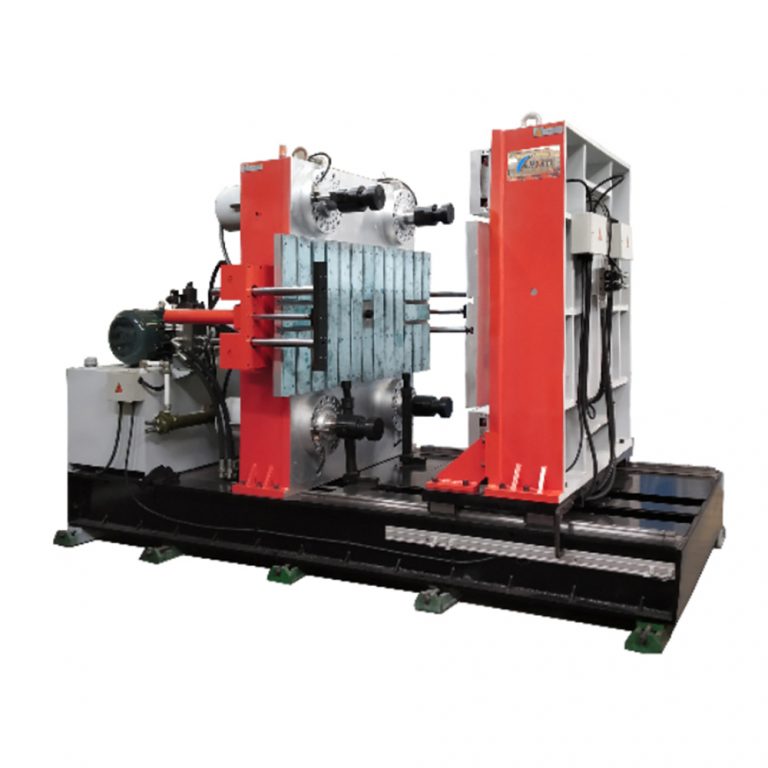
Measured work, honest tools, and the right partner converge to solve what looks like an esoteric machine problem but is really a production life-saver. HWAYI brings that kind of practical machinery and on-the-ground know-how to shops refining their processes — HWAYI.
Quiet wins.